Tim Pawlenty Quotes
The unions and the auto companies have been unable to put a deal together that fundamentally restructures the industry. It needs to get done. The only way it's really going to get done is in bankruptcy court. They should have done it six months ago they should do it now.
Pawlenty, Tim. Interview by David Gregory. Meet the Press, NBC, 31 May 2009.

President George W. Bush had forestalled the Automobile Industry bankruptcy so that incoming President Obama could organize a rescue and reform of the industry. This was very effective and the industry was more profitable than ever in a few years. Romney however, had already changed his political persona from his previous moderate Republican to the hard right ideological base of the Republican party. In the election of 2012, he lost every Midwestern state whose economy was dependent on the auto industry, even though a number of them had elected Republican Governors and legislatures. This quotation was the subject of tens of thousands of pro-Obama campaign commercials. It made Romney’s last minute attempt to morph back to being a moderate seem silly in those Midwestern states.


With the large number of jobs that are going overseas, and the increasing productivity, the economics of the late 20th century and early 21st century made job security an anachronism. Therefore the unions were weakened.


This was praise indeed as Wellman was generally very conservative.

The practice worked fine in the Automobile industry, until there was intense competition from imported cars, and price increases were not easy to sustain and keep market share at the same time. When the automobile executives made some bad decisions, there was great conflict with the Unions who argued that it was the management that made the big mistakes and therefore the workers should not have to reduce their remuneration, and the automobile companies were caught in a death spiral where there costs were too high for the cars they made, the quality had slipped in an effort to save costs, and they did not make the smaller, low gas mileage cars that were in demand. The industry would have failed completely had it not been for the George W. Bush and Barack Obama administrations working together to bail out the American auto companies to the distress of many conservative ideologues in and out of Congress. See {637913} for a classic right wing ideological response to bailouts earlier.

At the time, most company owners and managers refused to bargain collectively with employee elected organizations. Hoover was then an exceptionally modern business person who realized the importance of good working relations between management and labor and advocated collective bargaining. However, as he got deeper into partisan politics, he backed off urging this. Nationally, in the 1960s collective bargaining had become an instrument of basic sound management, but more and more managements returned to simply refusing to bargain with employee organizations and instead strengthened their managers and supervisors and adopted (by choice and by government regulation) more and more modern, healthy, safe, efficient and attractive working conditions and policies. By the 21st century, labor unions and employee organizations had lost their attractiveness while managers were more attentive to workers and there were very few private companies engaged in collective bargaining.


Essentially Mellon told the President to let the entire economy crash. With huge numbers of people out of work, labor would be more humble and not only settle for lower wages, but will work harder, and without "excess" income beyond their basic needs, they would not drink and engage in other immoral activities. President Hoover, a wealthy man himself, did not go along with Mellon's idea of making the situation worse, but his conservative philosophy of government would not allow the Government to "interfere" with the private economy or give any direct assistance to the citizens.

In 1892 President Harrison and the Republicans were trying to win a second term and were embarrassed by a bloody strike and riot at the Homestead steel works. Frick, the Homestead General Manager, was visited by a Republican emissary suggesting that Frick recognize the union and reduce the public embarrassment.. The Republicans lost to Grover Cleveland and the Democrats.

Norris was a member of the U. S. House of Representatives when the Taft-Hartley Act was debated. The pressure was intense. He told union leaders in his district:


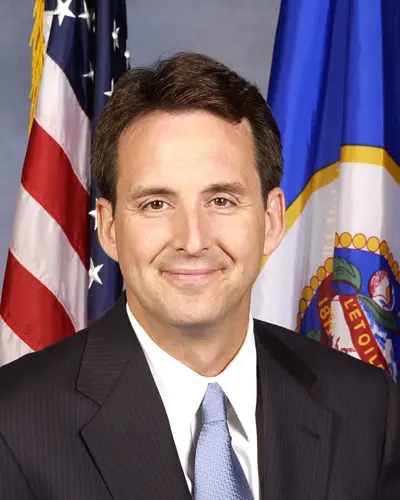
Timothy James Pawlenty is an American businessman and politician. A Republican, he served as the 39th governor of Minnesota from 2003 to 2011. From 1993 to 2003, he served in the Minnesota House of Representatives, where he was majority leader for two terms. In 2011, he ran for the Republican presidential nomination and was subsequently a leading contender to be Mitt Romney's running mate before serving as co-chair of Romney's campaign.
