Samuel P. Huntington Quotes
The underlying problem for the West is not Islamic fundamentalism. It is Islam, a different civilization whose people are convinced of the superiority of their culture and are obsessed with the inferiority of their power. The problem for Islam is not the CIA or the U.S. Department of Defense. It is the West, a different civilization whose people are convinced of the universality of their culture and believe that their superior, if declining, power imposes on them the obligation to extend that culture throughout the world,
Samuel P. Huntington, Quoted in The Washington Post, July 23, 2017
Sourced by: Eigen's Political and Historical Quotations


The Arabs have a long history of arrogant and disdainful treatment by others given the British Colonial history in the Middle East, the French (who invaded Egypt under Napoleon), the Islamic Ottoman Empire which controlled the Middle East before that, and others. Along with the arrogance that usually comes with empire, Western support of the only democracy and modern state in the Middle East—Israel—was even more resented by the Arabs. Historically, there was a general feeling by much of the world that if the Arabs had no oil, no one would pay much attention to them. The Arabs naturally resented these attitudes. It was not until Nasser’s successor, Anwar Sedat, came to government in Egypt and King Hussein reformed Jordan, that Western attitudes began to change towards the Arab nations. The Western change was not because of any Arab “lesson” but the result of new, exceptionally capable leaders who have been reforming the Arab nations.

Most Muslims in the world prefer a Western modern lifestyle to their traditional culture. The Islamic fundamentalist leaders however see evil and the dissolution of their traditions in this process of modernization and try and polarize their communities to intimidate the modernists. The same thing happened in Christianity over the last centuries and the modernists prevailed, but even in America there are still religious fundamentalists (Christians and Jews) who reject and oppose modernism. The difference is that in America, the anti-modernists are relatively few and not nationally influential on public officials while in many Islamic nations, they are numerous and very influential on public officials. The American religious fundamentalists have already lost in trying to stave off modernity; in many Islamic nations the contest is still in doubt.


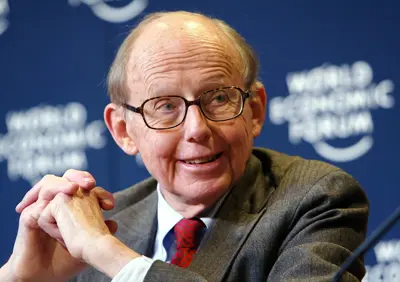
Samuel Phillips Huntington was an American political scientist, adviser and academic. He spent more than half a century at Harvard University, where he was director of Harvard's Center for International Affairs and the Albert J. Weatherhead III University Professor.
