Calvin Coolidge Quotes
The two great political parties of the nation have existed for the purpose, each in accordance with its own principles, of undertaking to serve the interests of the whole nation.
He was the Vice President at the time.
Calvin Coolidge, 1872-1933, 30th President of the United States (Republican, MA), Memorial Day address, Northampton, Massachusetts, May 30, 1923
Sourced by: Eigen's Political and Historical Quotations

The British Conservative Party was attacking the Liberal government for not dealing with the threat of German air power in the form of Zeppelins flying to England. The Germans were outraged at such freedom of the press at their expense. See {609907}.


On why he joined the Republican party:

This was a new political phenomenon where a President was perceived as more important, more powerful, and preferable to his party. Note that the base of the scale is labeled “Public Opinion”.

There were many in England and America who thought that political parties or “factions” as the Americans called them were inimical to republican government. Smyth disagreed and thought parties necessary for freedom and democracy. Turkey at the time was an Islamic Empire that while in decline still controlled large parts of Europe and most of North Africa. However, the Sultan had absolute control over both “church and state”. He was like the Pope and the Holy Roman Emperor in one person, There was no freedom of thought or speech.


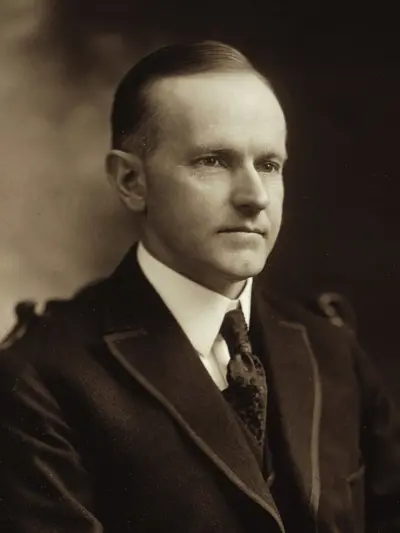
Calvin Coolidge was an American lawyer and politician who served as the 30th president of the United States from 1923 to 1929. A Republican lawyer from New England, born in Vermont, Coolidge worked his way up the ladder of Massachusetts state politics, eventually becoming governor of Massachusetts. His response to the Boston Police Strike of 1919 thrust him into the national spotlight and gave him a reputation as a man of decisive action. The next year, he was elected the 29th vice president of the United States, and he succeeded to the presidency upon the sudden death of Warren G. Harding in 1923. Elected in his own right in 1924, he gained a reputation as a small-government conservative and also as a man who said very little and had a rather dry sense of humor.
