Louis D. Brandeis Quotes
The tax-exempt privilege is a feature always reflected in the market price of [municipal] bonds. The investor pays for it.
Brandeis, Louis D. Dissenting opinion. National Life Ins. Co. v. United States. 277 U.S. 508. Supreme Court of the US. 1928.


The founder was Charles E. Coughlin, 1891-1979, a demagogic Catholic Priest who drafted the principles and invited others to join him. Hundreds of thousands did in this organization which began in idealism, and ended in scandal and hate mongering, so much so that Father Coughlin was ordered off the radio and out of politics by the Catholic Church. The National Union in 1936 had morphed into the Union Party which ran Presidential candidates in the 1936 election. The tax-exempt bond which the Union tried to abolish became the mainstay for the financing of most of the public infrastructure of the United State and still is.
They lost. Sweden had a combination of a high standard of living, a very robust and effective social safety net and a high marginal income tax rate. For Swedes who do not work, life is far better than for employed people in most other countries. For those who work, they pay a large proportion of their earnings as taxes. So the very hard worker is left with comparatively little advantage over non workers. Conservatives have always warned that this is a formula for economic stagnation as few people will work. The reality in Sweden and a few other nations, is that the vast majority of the Swedes choose to work—but they work not to survive, but for reasons which range from interest in their work, the social interaction of the workplace, the desire to create things and make a difference in society. Even in America there are many who work who do not need the money and are motivated by non-monetary factors.

The tax rates on income from working is much higher than on income generated from money which is invested. The reason for this is that the government wants economic growth and lowering the tax rate on investment profits will produce more investment which theoretically creates more jobs and strengthens the economy. However, most workers have no choice about whether they have to work. Lowering their tax rate will not induce them to work more. This not only produces a patently unfair burden on the worker compared to people who have capital to invest—usually among the wealthiest Americans. Another problem is that there are many forms of investment that does not produce any benefit for the United States. Many people invest in overseas banks, non American companies. These we tax at a low rate and all the benefits of the investment go to the foreign country.

[If a business takes other investors in to finance its growth or expansion, there are no tax consequences with the equity investment. However, if the same business borrows money from a bank, the business can deduct the interest cost of the debt from their federal and usually state taxes. If an individual buys a house and takes a large mortgage, the owner can deduct the interest from his taxes. However, if she instead does the more prudent and safe thing and puts more cash equity and takes a smaller mortgage, she only gets a small tax deduction.]


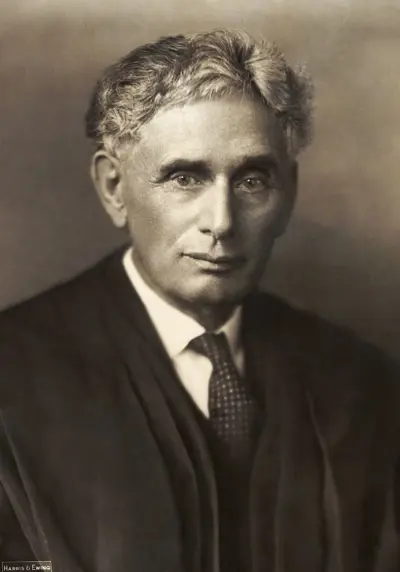
Louis Dembitz Brandeis was an American lawyer and associate justice on the Supreme Court of the United States from 1916 to 1939. He was born in Louisville, Kentucky, to Jewish immigrant parents from Bohemia (now in the Czech Republic), who raised him in a secular home. He attended Harvard Law School, graduating at the age of 20 with the highest grade point average in the law school's history. Brandeis settled in Boston, where he founded a law firm (that is still in practice today as Nutter McClennen & Fish) and became a recognized lawyer through his work on progressive social causes.
