Henry George Quotes
The tax upon land values is the most just and equal of all taxes. It falls only upon those who receive from society a peculiar and valuable benefit, and upon them in proportion to the benefit they receive.It is the taking by the community for the use of the community of that value which is the creation of the community. It is the application of the common property to common uses. When all rent is taken by taxation for the needs of the community, then will the equality ordained by nature be attained.
George, Henry. Progress and Poverty. W. M. Hinton & Co., 1879, p. 377.


An income tax had been instituted during the Civil War but had lapsed. Existing taxes were all excise or head taxes—very regressive. Later there was a political movement to bring back the income tax with the intention of taxing all income equally. There was a titanic struggle which culminated in a Constitutional Amendment allowing the income tax. None of the original politicians, for or against, the income tax could never imagine an income tax that would charge lower rates for investment income. That was the entire purpose of the income tax at the beginning—to tax investment (unearned) income. The “capital gains tax” was the creative way of the rich getting back some of what they thought the lost when the income tax was instituted.


In modern America, there are two political views of this notion. The one held by a small majority of the population is Trenchard’s quotation taken literally. Their view is that there if the is no way to maintain liberty if there is too wide a gap between the rich and the rest of the population. The second variant, held by many conservatives limits the equality to equality of opportunity. They are loathe to take any position that says that any gap between the rich and the remainder of the citizens might be too large. They would particularly disagree with the first sentence of another Trenchard quotation, {627024}.

She improved the economy considerably but was stuck in a socialized economic ideology that inhibited major private sector growth, without which it is impossible to eliminate poverty and with which excessive greed can also produce poverty.

Although his title was “Deputy Governor” he was the highest ranking official of the British Government in Pennsylvania so he is often referred to as “Governor”. Many of his views came from the English Civil War Radicals. He organized a “Leather Apron Club” in Pennsylvania.

The very rich told the middle class that if the rich had to pay taxes there would be little money left to operate factories and buy luxuries that employed middle class merchants and artisans. Many believed the argument and were willing to pay taxes even though the richest people did not. Gogel held the line however, and the desperate need for war financing for Napoleon Bonaparte Bonaparte’s conquests caused the King to tax even the rich.


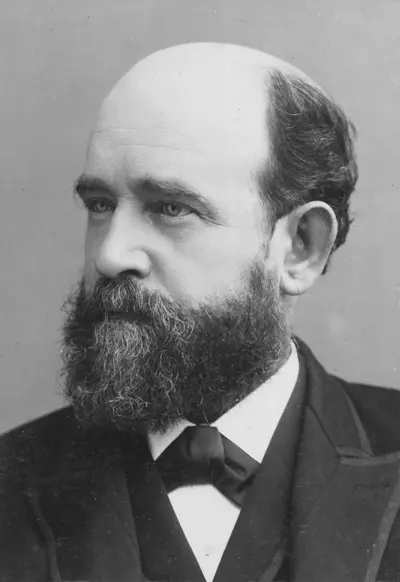
Henry George was an American political economist and journalist. His writing was immensely popular in 19th-century America and sparked several reform movements of the Progressive Era. He inspired the economic philosophy known as Georgism, the belief that people should own the value they produce themselves, but that the economic value derived from land (including natural resources) should belong equally to all members of society. He argued that a single tax on land would create a more productive, more just society.
