John L. Lewis Quotes
The steel workers have now buried their dead, while the widows weep and watch their orphaned children become objects of public charity. The murder of these unarmed men has never been publicly rebuked by any authoritative officer of the state or federal government.
Lewis, John L. "Labor and the Nation." Vital Speeches of the Day, vol. 3, no. 23, 15 Sept. 1937, p. 732.


The Governor had sent the Federal Government a bill for $118 million to cover the cost of medical, educational, and other social services for illegal aliens.

When he wrote this article, America was in the middle of the Great Depression. In its first 3 years, President Herbert Hoover, a great believer in private charity, was so rigid in his ideology, that he refused to allow the Federal Government to provide some relief to the vast number of people in need who had overwhelmed the capacity of private charities. At the same time, the more affluent whose generosity funded the charities, had seen their own fortunes slashed by the depression and the themselves were often failing. When Franklin Delano Roosevelt was elected, he was much more flexible and when Flexner was writing this article, the Federal Government was performing many functions that before were only provided by private organizations.


Mormons were not only discriminated against but frequently robbed, murdered and ethnically cleansed from different parts of the country. In general the Federal Government did little or nothing regarding the plight of the Mormons. Civil order and crime prevention where generally thought of as State functions except where Indians were involved where the Army would be mobilized.

al-Mahalawi takes a classic Islamic viewpoint towards Muslim brutality and violent behavior. He does not condone it, but he understands the reasons which are always the fault of the victims or others but never that of the perpetrators of the cruelty and violence.


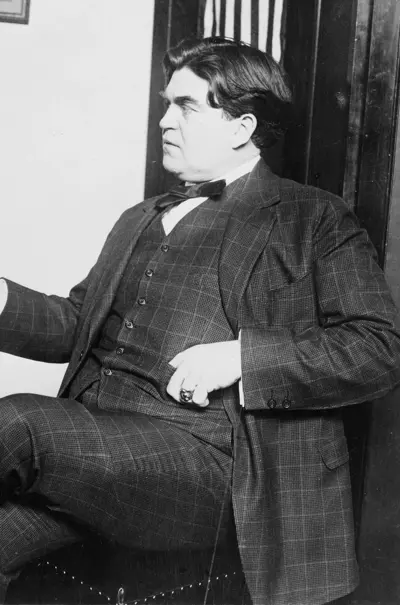
John Llewellyn Lewis was an American leader of organized labor who served as president of the United Mine Workers of America (UMW) from 1920 to 1960. A major player in the history of coal mining, he was the driving force behind the founding of the Congress of Industrial Organizations (CIO), which established the United Steel Workers of America and helped organize millions of other industrial workers in the 1930s, during the Great Depression. After resigning as head of the CIO in 1941, Lewis took the United Mine Workers out of the CIO in 1942 and in 1944 took the union into the American Federation of Labor (AFL).
