Robert Bork Quotes
The statutes are never enforced, but legislators, who would be aghast at any enforcement effort, nevertheless often refuse to repeal them.
Commenting on many statutes covering personal sexual activity:
Robert Bork, U. S. Solicitor General, Judge, U. S. Court of Appeals, Washington DC, The Tempting of America, 1991
Sourced by: Eigen's Political and Historical Quotations


The then current example was with same sex marriage. Some people who claimed that their religion declared same sex marriage as a sin and prohibited their aiding and abetting that activity. As a result, they claimed that their right of religious freedom allowed a county clerk to refuse to issue the marriage license or a hotel to refuse to allow a gay couple to rent their facility for a wedding, or a retail store to refuse to sell the couple bedding.

strict and intrusive law enforcement (See {595406})


The country had just gotten rid of Prohibition. However, there was substantial censorship of literature on the part of the Post Office, then a government agency. Abortion was then illegal in every state, and in many states it was a criminal offence to sell or distribute condoms. Homosexuality was a crime in most states and it disqualified a person from Federal employment as did a woman who had borne a child out of wedlock. Films were censored, and in some states, the only legal position for a married couple to have intercourse was the so called “missionary position”. All others were often a crime. Store owners could not open on Sunday, and Christian prayers were compulsory in many areas of society.


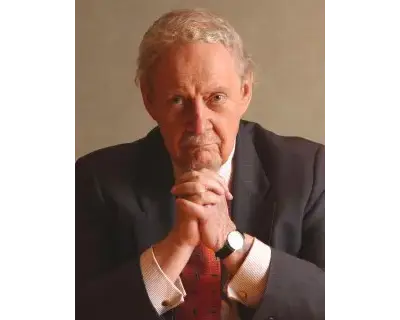
Robert Heron Bork was an American judge, government official, and legal scholar who served as the Solicitor General of the United States from 1973 to 1977. A professor at Yale Law School by occupation, he later served as a judge on the influential U.S. Court of Appeals for the D.C. Circuit from 1982 to 1988. In 1987, President Ronald Reagan nominated Bork to the U.S. Supreme Court, but the U.S. Senate rejected his nomination.
