James Baldwin Quotes
The South is very beautiful but its beauty makes one sad because the lives that people live here, and have lived here, are so ugly.
Baldwin, James. "Nobody Knows My Name: A Letter from the South." Nobody Knows My Name, Dial Press, 1961.


The highway was planned to go through a poor neighborhood which had a high percentage of Black residents—all of whom would have to find other housing and move to make room for the highway. If the government plans a highway through a wealthy area, the cost to condemn and pay for the land will be much greater than if a poor neighborhood is acquired. For urban highways, the poor almost always bear a disproportionate share of the inconvenience while the major benefit inures to the wealthy and middle class. Abbot had been a labor organizer and a professional artist before he entered politics. The graphic is of his famous poster which by itself stopped the plans to build the highway very quickly.
_0_thumbnail_47x47.jpg "William Gregg of South Carolina")
Gregg exclusively hired poor whites to work in his factory, hoping to elevate them into a more civilized—though still a menial—station, providing steady work and granting access to schools.


He was not only an atheist himself, but he was a major opponent of organized religion which he regarded as one or the major initiators and drivers of slavery, segregation and discrimination. For this reason he was critical of Martin Luther King—{583307}. His irreligiosity had always prevented his gaining much support from his fellow African Americans even though a great writer like H. L. Menken considered Schuyler, "the best writer in America".
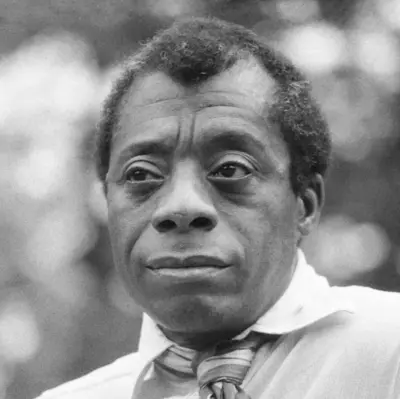
James Arthur Baldwin (August 2, 1924 – December 1, 1987) was an American writer. He garnered acclaim for his work across several mediums, including essays, novels, plays, and poems. His first novel, Go Tell It on the Mountain, was published in 1953; decades later, Time magazine included the novel on its list of the 100 best English-language novels released from 1923 to 2005. His first essay collection, Notes of a Native Son, was published in 1955.
