John Greenleaf Whittier Quotes
The slave will be free. Democracy in America will yet be a glorious reality; and when the top-stone of that temple of freedom which our fathers left unfinished shall be brought forth with shoutings and cries of grace unto it, when our now drooping Liberty lifts up her head and prospers, happy will he be who can say, with John Milton, "Among those who have something more than wished her welfare, I, too, have my charter and freehold of rejoicing to me and my heirs."
Whittier, John Greenleaf. "Justice and Expediency." The Writings of John Greenleaf Whittier, vol. 7, Houghton, Mifflin and Company, 1888, p. 57.


President Benjamin Harrison and Congress proclaimed that October 31, 1892 be a national celebration of the 400th Anniversary of Columbus landing in America. Bellamy represented a juvenile weekly publication and was named chairman of the committee to conduct the celebration. A first draft of the pledge was written by James B. Upham, a staff member of the publication. The words "under God" were added in 1952 by an Act of Congress. The original had “to my flag.” The pledge was first used publicly at the Chicago World’s Fair on October 21, 1892. It was not endorsed by Congress until 1942. It is officially recognized as law in 36 United State Code 172.

Bull Moose Party


He succeeded to the extent that he was the driving force behind the British abolition of the Slave Trade.

Even before we had a Constitution there was major opposition to slavery. The “price” of the American Union was the acceptance of the slavery of the South. But the hypocrisy of a country based on liberty to allow and enforce slavery was not lost on the founding fathers. Ironically the abolitionists among the founding fathers were certain that they could persuade the Southern slaveholders of the error of slavery in a few years and things would be set right in the land. Even George Washington {630626}, and Thomas Jefferson and some other slaveowners at the time wished to see its abolition. Slaveholding Southern Founding Fathers in general were so wary of the abolitionists that they achieved structural, disproportionate, power in the new Constitution to ward off the abolitionists attempts to reform slavery.


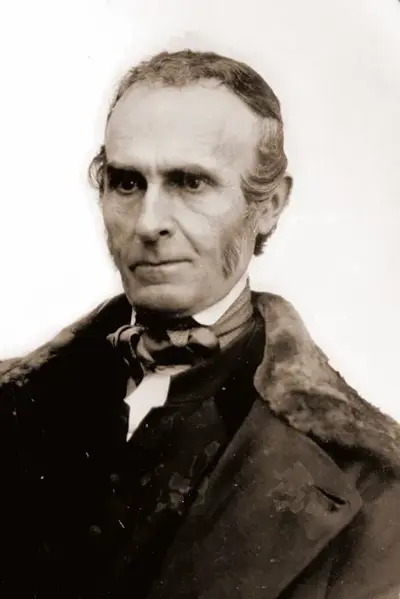
John Greenleaf Whittier was an American Quaker poet and advocate of the abolition of slavery in the United States. Frequently listed as one of the fireside poets, he was influenced by the Scottish poet Robert Burns. Whittier is remembered particularly for his anti-slavery writings, as well as his 1866 book Snow-Bound.
