Joseph Conrad Quotes
The scrupulous and the just, the noble, humane, and devoted natures; the unselfish and the intelligent may begin a movement--but it passes away from them. They are not the leaders of a revolution. They are its victims
Joseph Conrad, 1857-1924, English Author, Under Western Eyes
Sourced by: Eigen's Political and Historical Quotations


3rd Earl Russell of Kingston


Samuel Langhorne Clemens, 1835-1910


At the time, Capetown was under the control of the Dutch East India Company which had recruited Gordon from Scotland. There was a wave of liberality following the Enlightenment, the American Revolution, and the very vocal English, anti-slavery, reformers. The Dutch were concerned mainly with making money, and that they thought that meant stability and the status quo. Gordon was their strong spokesman on this. Like American Southern slave owners, Gordon read the Bible as God endorsing slavery and the inferiority of Blacks. Thus, reformers did not "believe in God any more".
the Dutch monarchy supported by England The French fear of course was that the revolutionary fervor spreading to the bourgeois could easily spread to France, and that is exactly what happened 4 years later. See {639769} for more of his view on the Dutch revolutionary spirit that might infect France.

He was referring to the public unrest and dissatisfaction when an middle, poor or impoverished class is ground down by rigid interpretation and contract laws so that people in debt can rarely get out. He argues that this was a stark reality before most revolutions and a primary cause.


The Turkish revolution was by historical standards relatively bloodless as compared especially with other republican revolutions like the United State and France. However, the revolution that brought Ataturk to power was a relatively mild one in terms of the immediate changes that unlike many revolutions which produced instant radical change. In Turkey, the radical change took place in the years after the revolution when Ataturk with hardly any bloodshed produced compulsory public secular education, scientific elevation in society, separation of mosque and state, gender equality including universal voting, change to western dress, elimination of the caliphate, speech and press freedom, and many others including changing the entire language to use the Latin alphabet instead of Arabic. No nation in history has gone thought more social and cultural change and modernized so fast as Turkey after its revolution. The result is the most modern and successful Islamic country in the world.


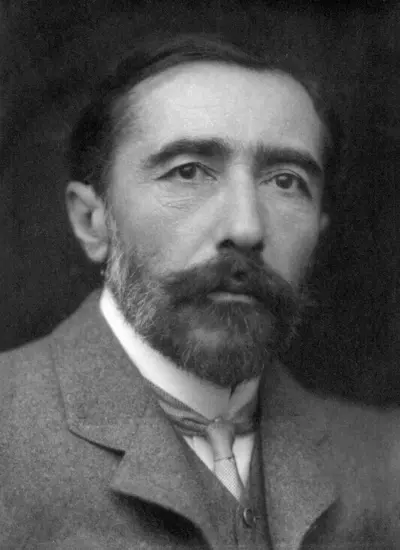
Joseph Conrad was a Polish-British writer regarded as one of the greatest novelists to write in the English language. Though he did not speak English fluently until his twenties, he became a master prose stylist who brought a non-English sensibility into English literature. Conrad wrote stories and novels, many with a nautical setting, that depict trials of the human spirit in the midst of what he saw as an impassive, inscrutable universe.
