Percy W. Bridgman Quotes
... the scientist would maintain that knowledge in of itself is wholly good, and that there should be and are methods of dealing with misuses of knowledge by the ruffian or the bully other than by suppressing the knowledge.
Bridgman, Percy W. "Scientists and Social Responsibility." Bulletin of the Atomic Scientists, vol. 4, no. 3, 1948, p. 70.


She was referring to scientists who might have personal moral judgments regarding a scientific issue like embryos, stem cells, and abortion or animal experiments that are different from that of the government at the time, might have their job threatened if they refused to personally perform a procedure that was offensive to them.


This problem is still with us. Nuclear proliferation, dirty radioactive bombs, and terrorism are potential down sides of radioactivity.

See Hans Bethe {628530} for a practical implication of this principle.

This was written over 2 decades before Dolly the sheep was first cloned. Since his call for a societal public discussion about cloning, there has been very little, but by the 21st century there had been just a few hasty, ill-informed, almost hysterical efforts to legislate on the subject.

At the time there were some religious extremists who interfered with important research as they did not believe that man should try and do what before only God could do. In modern times the religious interference in scientific research has tended to be about research involving contraception, abortion or embryonic stem cell research. The most dangerous by the 21st century were the PETA and other “animal rights” terrorist groups who not only physically sabotaged some scientific research but harmed people and endangered human life in the process. Most scientists however were not intimidated and lived up to their ethical obligation to continue scientific research despite the danger of the terrorists.


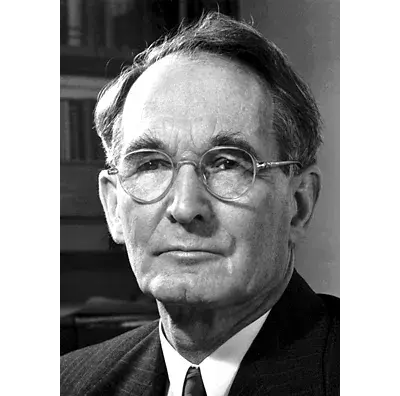
Percy Williams Bridgman was an American physicist who received the 1946 Nobel Prize in Physics for his work on the physics of high pressures. He also wrote extensively on the scientific method and on other aspects of the philosophy of science. The Bridgman effect and the Bridgman–Stockbarger technique are named after him.
