Sendhil Mullainathan Quotes
The scarcity trap captures this notion we see again and again in many domains. When people have very little, they undertake behaviors that maintain or reinforce their future disadvantage. If you have very little, you often behave in such a way so that you'll have little in the future.
Mullainathan, Sendhil, and Eldar Shafir. Scarcity: Why Having Too Little Means So Much. Times Books, 2013.


Olasky and many religiously oriented analysts, believe that public shame shapes and controls behavior and if a society does not have a set of recognized norms, and every person is free to determine his own propriety, there will be moral degeneration and there is no way to produce desirable social and political outcomes. This is perhaps the longest political and philosophical ongoing debate. In a society people cannot be free if there is fear, coercion and chaos with public safety primary. But how can this be produced unless there are generally accepted moral and behavioral codes like that of a religion. And then if one has that, and it is dominant, how can someone be free from the coercion of that morality or religious code? There must be freedom not to believe. Or must there be? Many say yes. Many others, especially orthodox leaders of most religions believe, No. Christian, Jewish and Muslim fundamentalists all say No, but then they insist that the norm be theirs.

The cycle of poverty of 20th century America was not new. It has existed for centuries in most cultures and countries.


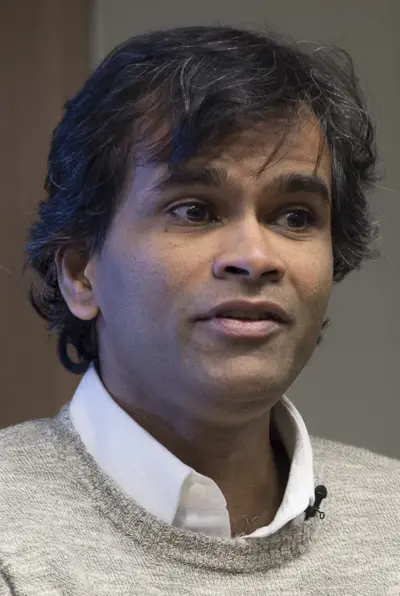
Sendhil Mullainathan (pronunciation (help·info)) (born c. 1973) is an American professor of Computation and Behavioral Science at the University of Chicago Booth School of Business and the author of Scarcity: Why Having Too Little Means So Much (with Eldar Shafir). He was hired with tenure by Harvard in 2004 after having spent six years at MIT.
