Abraham Pais Quotes
The rule of the game was never assume that anybody, however honorable, would be able to stand up under torture. If Mr. X, who knew where I was, was caught for some reason, I should move.
Pais, Abraham. A Tale of Two Continents: A Physicist's Life in a Turbulent World. Princeton University Press, 1997.


It should be noted that at the beginning of the manual the reader is told that force or involuntary interrogation is illegal. Then later, the manual tells the interrogator that headquarters approval is required for unwilling subjects. See {597792}. Throughout the beginning of the War on Terrorism the principle was quietly used in incarcerating Taliban and other terrorists.


In the War on Terror, some CIA officers had gotten a George W, Bush Administration green light to torture some captured terrorists using a torture technique known as “water boarding”—a practice for which American military personnel were court marshaled and convicted in the Philippine War. The torture sessions had been videotaped, a normal procedure with CIA interrogations. The fact of the torture had leaked and a national scandal ensued with Americans on both sides of the question. President Bush and his Vice President publicly stated that the United States does not torture. Rodriguez then ordered the tapes destroyed. Later he gave his reasons after the Obama Administration decided not to investigate the matter or determine which, if any, CIA officials might have broken the law, by wither doing the torturing or destroying evidence—“obstructing justice.”
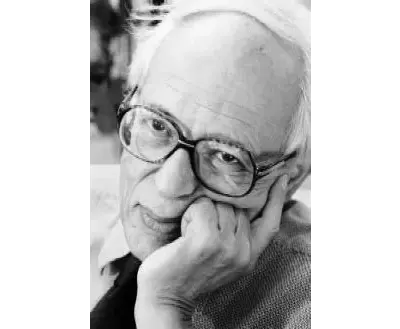
Abraham Pais was a Dutch-American physicist and science historian. Pais earned his Ph.D. from University of Utrecht just prior to a Nazi ban on Jewish participation in Dutch universities during World War II. When the Nazis began the forced relocation of Dutch Jews, he went into hiding, but was later arrested and saved only by the end of the war. He then served as an assistant to Niels Bohr in Denmark and was later a colleague of Albert Einstein at the Institute for Advanced Study in Princeton, New Jersey. Pais wrote books documenting the lives of these two great physicists and the contributions they and others made to modern physics. He was a physics professor at Rockefeller University until his retirement.
