Malcolm Nance Quotes
I saw the waterboarding device in Cambodia's notorious Tuol Sleng prison in Phnom Penh and did not see another until I was strapped down on an identical one at SERE. Waterboarding was administered as a 'stress demonstrator' to show that an enemy could make one say anything. And one does.
Nance, Malcolm. "Waterboarding is Torture... Period." Small Wars Journal, 31 Oct. 2007.


The George W. Bush administration had issued a memorandum to key Federal Agencies stating that certain types of torture were legal—a finding that was quickly repudiated after Bush and VP Cheney—who was a leading force for allowing torture of terrorism suspects—were out of office. But Bush had told the American People and the World that the United States will not torture any prisoners. The dilemma was “solved” when someone came up with this euphemism.

Neilson had flown in the Doolittle Raid on Tokyo. It was the first bombing of Tokyo in WWII. He was shot down and captured. He was tortured including the torture of ‘waterboarding.’ The Japanese who administered the torture and who allowed it were tried before the International Military Tribunal for the Far East—the Tokyo War Crime Trials. They were convicted and punished. In the first decade of the 21st century the George W, Bush Administration argued that waterboarding was not necessarily torture despite the fact that Americans had tried and punished foreigners who engaged in the practice and even Americans who did. It was completely outlawed by military regulations but some Americans felt that it should be allowed by the CIA in dealing with terrorists.


After the assassination of Egyptian President Anwar Sadat hundreds of Egyptian religious fundamentalists were rounded up, jailed and tortured. al-Zawahiri broke under torture and revealed the names of some of his anti-government associates. Although he was not personally involved in the murder of Sadat, he served three additional years in jail. Motivated by has thirst for revenge at his torturers and his guilt at having been forced to betray his friend, he learned all he could about terrorism from the older Jihadists also in the same jail, and when he was released he elevated Islamic terrorism to another level by developing a strategy for the use of suicide bombers.


Several American soldiers have been court marshalled and found guilty of illegal torture for Warterboarding prisoners to induce them to provide information. Most experts agree that intelligence received this way is highly unreliable in that victims will say anything they think the torturer wants to hear to get the torture to stop.

At that time in American History, the George W. Bush Justice Department had a small team of lawyers who wrote a legal brief that defined torture in such a way that many of the most common forms of torture were no longer legal torture, even though they had been torture in American law and were again torture after this embarrassing episode of American history. The renamed techniques were called “enhanced interrogation” and a few terrorist suspects were subjected to it before the rules and laws were changed and the “legal opinions” nullified. The FBI and military intelligence did not use the so called enhanced interrogation techniques as they felt that torture produced unreliable intelligence as the victim will say anything the questioner wants to hear to end the torture. They also thought the Justice department memo was sloppy and defective legal work. Senator McCain was a particular expert on torture in that he had, during the Vietnam War, been captured and imprisoned for 7 years during which he had been tortured on several occasions.


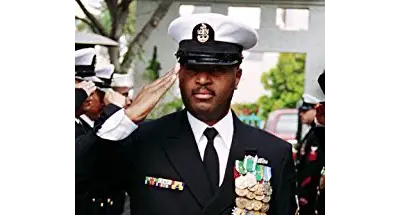
Malcolm Wrightson Nance (born 1961) is an American author and media commentator on terrorism, intelligence, insurgency, and torture. He is a former United States Navy Senior Chief Petty Officer specializing in naval cryptology.
