William Ellery Channing Quotes
The right to free discussion is ... to be guarded by the friends of mankind, with particular jealousy ... He who would rob his neighbor of it, should have a mark set upon him as the worst enemy of freedom.
William Ellery Channing, 1780-1842, Unitarian minister and reformer, Works
Sourced by: Eigen's Political and Historical Quotations


Striking down a law making cross burning a crime:

This was a decade before the Constitutional Convention in Philadelphia. You can imagine the distress of Vermonters when the U. S. Constitution was written with no provision for absolute freedom of speech which they had had for a over a decade. They would not ratify the U, S, Constitution without the understanding that there would be a Bill of Rights added with the First Amendment.
Danish fundamentalist Muslim Groups were demonstrating, protesting, and threatening Danes who wrote or published cartoons depicting the Prophet Mohammed. Other Europeans who had committed what Muslims thought to be blasphemy had been attacked and even murdered by Muslim fundamentalists. Led by Nasim Rahnama, some Danish Muslims, braved attack and possible death, and produced a petition of Muslims defending the right of freedom of publication. See {59932} & {59919}.

Referring to the Erdogan government of Turkey. That country elected Erdogan who then turned his back on the Ataturk inspired democracy and instituted many non-democratic policies and practices including jailing civil servants, teachers and journalists who publicly criticize the president or the government.


This quotation is typical of many constitutions in the sense that one part of the Constitution guarantees political freedom for all citizens and another part then makes so many exceptions that there are no guaranteed rights other than those the government wishes to give at any point of time. In this particular Constitution Article 10 does both, one right after the other. So Clause 1 gives the rights and Clause 2 explains how they can be taken away. For example, in 2008 university students were not allowed to join political parties.

_0_thumbnail_47x47.jpg)

Hall wrote the above in The Friends of Voltaire as an illustration of Voltaire's beliefs. This quotation – which is sometimes misattributed to Voltaire himself – is often cited to describe the principle of freedom of speech. Hall wrote under a man’s name so that her work would be taken more seriously which it was.

In WWI Congress had passed a law that prohibited anyone from undermining or interfering with the war effort. The defendants had passed out anti-war literature to young men heading for military service. The court then overlooked the First Amendment and came up with a strange logic where the “clear and present danger” was the test of whether the First Amendment would apply. The anti war pamphleteers went to jail. Today, we look back on this and find it very surprising but this is yet another example of erosion of freedom and civil liberties when the nation is at war. By the 1950s, the Supreme Court had reversed itself and the First Amendment was restored to its original intent.


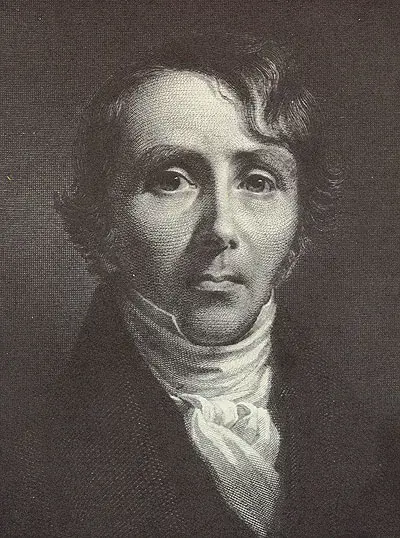
William Ellery Channing was the foremost Unitarian preacher in the United States in the early nineteenth century and, along with Andrews Norton (1786–1853), one of Unitarianism's leading theologians. Channing was known for his articulate and impassioned sermons and public speeches, and as a prominent thinker in the liberal theology of the day. His religion and thought were among the chief influences on the New England Transcendentalists although he never countenanced their views, which he saw as extreme. He espoused, especially in his "Baltimore Sermon" of May 5, 1819, given at the ordination of the theologian and educator Jared Sparks (1789–1866) as the first minister of the newly organized First Independent Church of Baltimore, the principles and tenets of the developing philosophy and theology of Unitarianism, leading to the organization in 1825 of the first Unitarian denomination in America (American Unitarian Association) and the later developments and mergers between Unitarians and Universalists, resulting finally in the Unitarian Universalist Association of America in 1961.
