James Monroe Quotes
The right of self defense never ceases. It is among the most sacred, and alike necessary to nations and to individuals, and whether the attack be made by Spain herself or by those who abuse her power, its obligation is not the less strong.
Monroe, James. "Second Annual Message." A Compilation of the Messages and Papers of the Presidents, compiled by James D. Richardson, vol. 2, Bureau of National Literature, 1897, p. 41.


This is a very important quotation in that there are some who believed—then and now—narrowly that self defense is limited to responding to only physical attacks on the United States per se. Kellogg made it clear that it includes attacks on the United States and any of its possessions. Most important it allows response to any “danger” to the United States. By this definition, for example, if Saddam had been developing weapons of mass destruction in the Iraq war, the pre-emptive attack would have been self-defense. Since the claim of weapons development was bogus, it was not self defense. The key variable a reasonable danger. Nations determine that by what others do and say. In 2011, if Iran were developing nuclear weapons the U. S. could attack as an act of self defense because the Iranian highest level officials have called for “death to the United States”. When they just had the intention to harm us, there was no danger. But when they add the means to harm us to the intention, that is a danger. Likewise other nations may act in self defense if a potential enemy threatens to endanger them and has the means to carry out the threats or desires.


‘Necessity’ is another word that governments use in such situations. To deal with “National Security” governments tend to extend their power over individuals, encroach upon civil rights” and repress their population. This is true of right and left wing governments, democracies and dictatorships.


The highest court in New York. Kent did not originate this concept. He was stating an age old principle of law: Posse vicinum impediri, ne in suo solo, sine alia causa suaque evidenti utilitate, munimentum nobis propinquum extruat, aut aliud quid faciat, unde justa formido periculi oriatur.


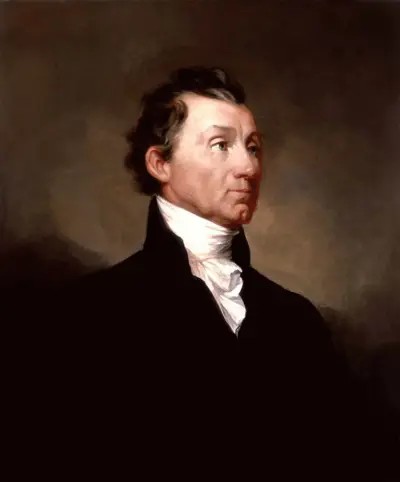
James Monroe was an American statesman, lawyer, diplomat and Founding Father who served as the fifth president of the United States from 1817 to 1825. A member of the Democratic-Republican Party, Monroe was the last president of the Virginia dynasty; his presidency coincided with the Era of Good Feelings. He is perhaps best known for issuing the Monroe Doctrine, a policy of opposing European colonialism in the Americas. He also served as the governor of Virginia, a member of the United States Senate, the U.S. ambassador to France and Britain, the seventh Secretary of State, and the eighth Secretary of War.
