Tariq Ramadan Quotes
The question about the Salafi is an important question as I say in Arab Awakening, and have often repeated since. I am really underlining the importance of this, because we really don't have very good memories. Remember - the Taliban in Afghanistan were not at all politicised in the beginning. They were just on about education. And then they were pushed by the Saudi and the Americans to be against the Russian colonisation, and as a result they came to be politicised.
Ramadan, Tariq. Interview by Amy Goodman. Democracy Now!, 28 Sept. 2012.


This statement was made 20 years before the Arab Spring of 2011.

“Martyrdom” is the euphemism that fundamentalist Muslims use to denote being killed while “fighting for Islam” or on a suicide mission for same. Many believe that such people ascend directly to Paradise where they are given a bevy of virgins and other “perks.” Ironically, this was the last interview that he gave before he himself was “martyred”—he was killed by coalition troops. This mental perspective is one of the reasons that fighting fundamentalist Islamic terrorists is so difficult. They perceive victory whichever way the battle or even the war comes out.


Most Islamic fundamentalists oppose the education of girls. Malala Yousafzai as a teen ager spoke out encouraging girls to go to school. This offended some of the Taliban fundamentalist terrorist, who threatened her if she continued to speak out. When she continued, they tried to murder her. They shot her in the head, but she was airlifted for medical treatment and survived. She was the winner of the European Sakharov Prize for Freedom of Thought and nominated for the Nobel Prize.


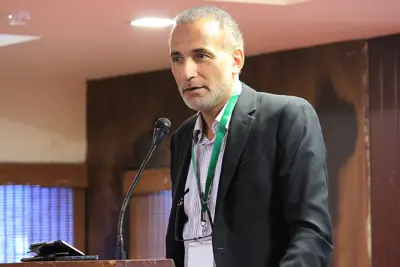
Tariq Ramadan is a Swiss Muslim academic, philosopher, and writer. He was a professor of contemporary Islamic studies at St Antony's College, Oxford and the Faculty of Theology and Religion, University of Oxford, but as of 2018 is taking an agreed leave of absence. He is a visiting professor at the Faculty of Islamic Studies at Hamad Bin Khalifa University in Qatar, and the Université Mundiapolis in Morocco. He is also a senior research fellow at Doshisha University in Japan. He is the director of the Research Centre of Islamic Legislation and Ethics (CILE), based in Doha. He is a member of the UK Foreign Office Advisory Group on Freedom of Religion or Belief. He was elected by Time magazine in 2000 as one of the seven religious innovators of the 21st century and in 2004 as one of the 100 most influential people in the world and by Foreign Policy readers (2005, 2006, 2008–2010, 2012–2015) as one of the top 100 most influential thinkers in the world and Global Thinkers. Ramadan describes himself as a "Salafi reformist".
