William Henry Harrison Quotes
The prudent capitalist will never adventure his capital . . . if there exists a state of uncertainty as to whether the Government will repeal tomorrow what it has enacted today.
Harrison, William Henry. "Inaugural Address, March 4, 1841." Inaugural Addresses of the Presidents of the United States, United States Government Printing Office, 1989.


The Stock Market went up slightly as a result of his efforts.


This was a surprising answer because most people would then have named terrorism, labor strikes, banking excess risk in investment, sufficient labor supply, weather (global warming) or bubbles. But most of the large companies and investors told him that they most worry about political bickering, gridlock, irrational law making, regulation, taxation and other factors which, to a great extent, are under the control of the politicians.

The Meltdown of 2008 came a year later and Citigroup, one of the largest banks in America, had massive liquidity problems and in order to stave off bankruptcy the taxpayers had to come up with $45 Billion. The bank executives, as this quotation demonstrates, knew that they were in a very risky situation and that if the subprime mortgages started to default, the “music would stop” and they and the other banks would have a massive liquidity problem. None the less, they kept on investing more and more of their bank customer’s money and making money in what they knew was a highly risky enterprise. The greed clouded their judgment and when the music stopped and many were no longer dancing, the Meltdown of 2008 almost destroyed the entire national economy and triggered the Great Recession where the overwhelming proportion of Americans had to suffer for the greed of those who could not “stop dancing” even as they knew it was very dangerous.


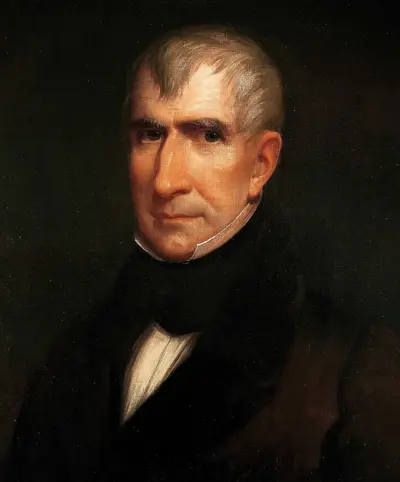
William Henry Harrison was an American military officer and politician who served as the ninth president of the United States for 31 days in 1841, becoming the first president to die in office and the shortest-serving U.S. president in history. His death sparked a brief constitutional crisis regarding succession to the presidency.
