William Ellery Channing Quotes
The progress of society depends on nothing more than the exposure of time-honored abuses.
William Ellery Channing, 1780-1842, Unitarian minister and reformer, Works
Sourced by: Eigen's Political and Historical Quotations

There had been a major labor strike in the textile mills of Lawrence. Ettor was one of the major strike leaders and strategists. The city authorities sided totally with the mill owners and used police and militia to try and break the strike. When one of the strikers was shot and killed (historians generally agree that the police had fired the shot), the authorities used the death to incapacitate the leadership of Ettor and two other “socialist” leaders who were professional strike organizers and leaders. The 3 were arrested and charged with murder, firing the shot that killed the striker. Ettor and the others were miles away at the time giving speeches to the strikers at another mill. None-the-less, they were arrested, jailed, and not even tried until after the strike was ended. The three were quickly acquitted. The jailing of the strike leaders backfired and made the strikers even more resolute. The laborers finally won the concessions, not to have their pay cut. The defendants went on to lead other strikes.


One of Ferguson’s theses is that historical change often happens very rapidly.


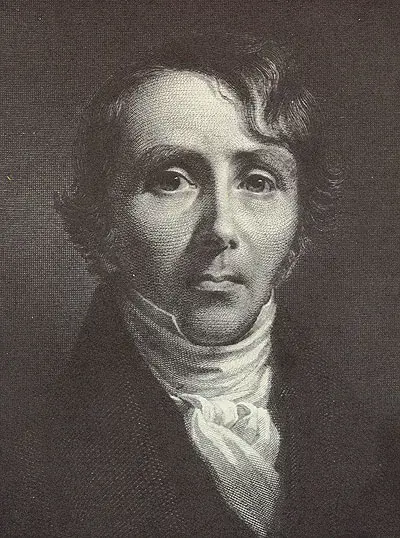
William Ellery Channing was the foremost Unitarian preacher in the United States in the early nineteenth century and, along with Andrews Norton (1786–1853), one of Unitarianism's leading theologians. Channing was known for his articulate and impassioned sermons and public speeches, and as a prominent thinker in the liberal theology of the day. His religion and thought were among the chief influences on the New England Transcendentalists although he never countenanced their views, which he saw as extreme. He espoused, especially in his "Baltimore Sermon" of May 5, 1819, given at the ordination of the theologian and educator Jared Sparks (1789–1866) as the first minister of the newly organized First Independent Church of Baltimore, the principles and tenets of the developing philosophy and theology of Unitarianism, leading to the organization in 1825 of the first Unitarian denomination in America (American Unitarian Association) and the later developments and mergers between Unitarians and Universalists, resulting finally in the Unitarian Universalist Association of America in 1961.
