James Lovelock Quotes
The problem is we don't know what the climate is doing. We thought we knew 20 years ago. That led to some alarmist books - mine included - because it looked clear-cut, but it hasn't happened.
Johnston, Ian. "'Alarmist' James Lovelock retracts doom prediction." NBC News, 23 Apr. 2012.

This is a classic technique used by politicians of the left and right when they are faced with scientific findings that do not comport with their ideological, religious, or political view of the world. Namely to point out that the science is not settled and the field is still in flux. Therefore, they are, that it si too early to make public policy on the basis of that. And they have little trouble finding that the scientists themselves who did the research that they do not like are the first ones to say that the science is in flux. For ALL SCIENCE IS IN FLUX and new findings are being introduced literally every day in most scientific fields. That very rarely does the new knowledge contradict the older science in huge and dramatic ways. Einstein’s Theory of Relativity turned the field of physics and mechanics upside down but it did not change the calculations that engineers and scientists would make in over 99 percent of their measurements. Within a few decades of Einsteins theory being published, it was demonstrated to be wrong—not completely wrong, but inadequate to measure the mechanics of tiny partials like electrons adn quarks. Quantum mechanics was born. And every week or so these days there is more knowledge that makes slight changes in the way we understand quantum mechanics. No science has ever remained settled for 1000 years since the beginning of scientific inquiry, By the 19th century most science did not remain settled for 100 years. In the 20th century “settled” science rarely lasted more than a decade, and in the 21st century, few are stable for even a year.


The “Victory” desired was to execute their propaganda campaign to cast doubt on the certainties of climate science so that most people will think that we can never be sure or the data which seems to show that there has been manmade climate change and global warming. This way, any proposed legislation that might impinge on oil profits can be challenged by stating that we should not lose jobs and damage the economy when there are major doubts as to whether or not there is any solid proof of a problem to be fixed. This technique of casting doubt on the science was modeled after the strategy of the tobacco companies in the 1950s and 1960s. They created large doubt in the public mind and ‘conventional wisdom’ that smoking really caused lung cancer and other diseases, that government action was forestalled for over a decade during which their profits were enormous. Finally, they could no longer maintain their fiction and ‘conventional wisdom’ finally came to realize that over 400,000 Americans died each year from cigarette smoking.


Most environmentalists worried about the global warming problem have one basic solution they want the world to adopt. Reduce the carbon footprint by reducing the amount of fossil fuels that we use. However, there are other techniques that are possible and are looking increasingly cost beneficial. But those worried about climate change tend to want to steer public discourse away from other solutions. They worry that if technologists like Myhrvold propose other solutions that may be credible, that will give the politicians of the world a rationalization for stopping the progress on reducing use of fossil fuels and political momentum would be lost with no certainty that these other technologies would be effective or worse whether the politicians would ever appropriate the moneys to give them a try and we would be left with nothing changing and the world warming with all the negative consequences therefrom.

Responding to host Joe Kernen wgo asked the new Trump Environmental Protection Agency administrator Scott Pruitt if it had been proved that “CO2 is the primary control knob for climate.”
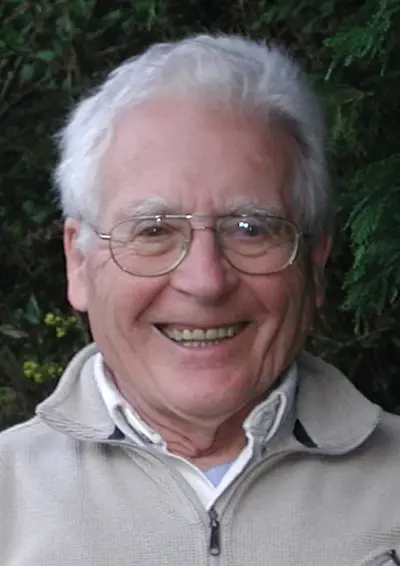
James Ephraim Lovelock, CH CBE FRS is an English independent scientist, environmentalist and futurist. He is best known for proposing the Gaia hypothesis, which postulates that the Earth functions as a self-regulating system.
