Thomas Sowell Quotes
Global warming' is just the latest in a long line of hysterical crusades to which we seem to be increasingly susceptible.
Thomas Sowell, Economist & Political Commentator, National Review, March 15, 2007
Sourced by: Eigen's Political and Historical Quotations

For an example of what Senator Jeffords was referring to, see {610719}.


The governor actually believed that global warming was the plot of left wingers. Since 99 percent of all qualified scientists agreed that the earth was experiencing an increase in average temperature and that much of the increase was cause by the actions of humans, Perry had to believe that somehow all these scientists had been coopted, intimidated, and enlisted to perpetrate this hoax. One problem with global warming policy making is that while virtually all scientists agree on the fact, there is disagreement of the extent, the timing and the causes. How many degrees of increase will occur and when? What will be the consequences? When will the changes take place? What proportion is man-made? These answers will come as more research is done, but many politicians are reluctant to do anything without precise estimates of the answers to these questions.


This was his last House debate and whereas almost all scientists had agreed that climate change was a serious challenge to the nation, an ideologically driven majority of his Republican Party denied that that there was any climate change that was different from the usual vicissitudes of nature, he tried to persuade his anti-scientific, conservative colleagues to face reality.


Many Republicans were in denial about climate change claiming that all the scientists were wrong about the facts of global warming and the danger to man that it posed. Beauprez, however, had an almost unique position among candidates. He agreed that climate change was a great danger, however, he thought the concern of most Democrats and some liberal Republicans was unnecessary hysteria because God will save the Earth—His creation.

What makes this quote particularly memorable is that Inhofe was actually the Chairman of the Senate Committee on Environment and Public Works and thus will go down in history.

Eugenics was an intellectual movement of the first half of the 20th century that was mostly junk science and was debunked. While the analogy is clever and makes her political point about climate change science, there are actually several major differences. Eugenics was never a set of scientific laws that had near unanimous support of all the scientists in that and related fields while climate science is. Eugenics was not an experimental science where its principles were subject to refutation with data. So called Eugenic scientists did no experiments, analyzed almost no data, and were more philosophical and political than scientific. Most of the Eugenics advocates were not scientists at all and had little or no training in science.

This is a classic technique used by politicians of the left and right when they are faced with scientific findings that do not comport with their ideological, religious, or political view of the world. Namely to point out that the science is not settled and the field is still in flux. Therefore, they are, that it si too early to make public policy on the basis of that. And they have little trouble finding that the scientists themselves who did the research that they do not like are the first ones to say that the science is in flux. For ALL SCIENCE IS IN FLUX and new findings are being introduced literally every day in most scientific fields. That very rarely does the new knowledge contradict the older science in huge and dramatic ways. Einstein’s Theory of Relativity turned the field of physics and mechanics upside down but it did not change the calculations that engineers and scientists would make in over 99 percent of their measurements. Within a few decades of Einsteins theory being published, it was demonstrated to be wrong—not completely wrong, but inadequate to measure the mechanics of tiny partials like electrons adn quarks. Quantum mechanics was born. And every week or so these days there is more knowledge that makes slight changes in the way we understand quantum mechanics. No science has ever remained settled for 1000 years since the beginning of scientific inquiry, By the 19th century most science did not remain settled for 100 years. In the 20th century “settled” science rarely lasted more than a decade, and in the 21st century, few are stable for even a year.


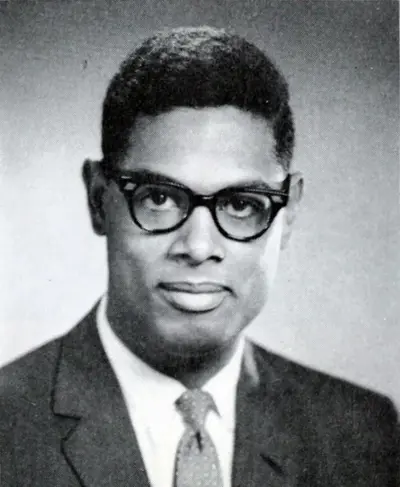
Thomas Sowell is an American economist, social theorist, and senior fellow at Stanford University's Hoover Institution.
