Milton Friedman Quotes
The problem is that, in a world of floating exchange rates, as Italy was before the euro, if one country is subjected to a shock which requires it to cut wages, it cannot do so with a modern kind of control and regulation system. It is much easier to do it by letting the exchange rate change. Only one price has to change, instead of many.


What the Prime Minister was trying to say is that the buying power had not been diminished suddenly for local and non-imported items.


“Pegged” exchange rates are a country’s money where the Government sets the value of the money in terms of some other currency—usually American dollars. The advantage of a pegged currency is that it is stable and does not fluctuate day to day. The disadvantage is that people realize that the value is artificial and other countries will not accept the pegged currency. Worse natives try and get as many dollars as they can because the fear that the Government will devalue and change the rate of exchange of the pegged currency.

Currency Pegs are policies and commitments that countries make to sate that their currency henceforth will have a fixed relationship to another currency—usually the American Dollar, the English Pound or the Euro. If a second and even more countries also agree to peg their currency to the same, then the counties who are pegging can trust each other’s currency providing economic stability and facilitating trade.


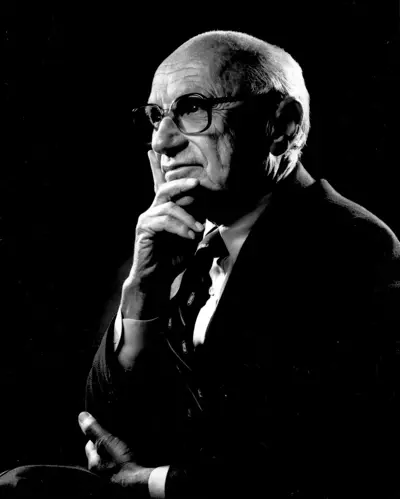
Milton Friedman was an American economist and statistician who received the 1976 Nobel Memorial Prize in Economic Sciences for his research on consumption analysis, monetary history and theory and the complexity of stabilization policy. With George Stigler and others, Friedman was among the intellectual leaders of the Chicago school of economics, a neoclassical school of economic thought associated with the work of the faculty at the University of Chicago that rejected Keynesianism in favor of monetarism until the mid-1970s, when it turned to new classical macroeconomics heavily based on the concept of rational expectations. Several students and young professors who were recruited or mentored by Friedman at Chicago went on to become leading economists, including Gary Becker, Robert Fogel, Thomas Sowell and Robert Lucas Jr.
