Ben Bernanke Quotes
If you are asking me if I would advocate that the Chinese go to greater flexibility in their exchange rate, I certainly would.
Bernanke, Ben S. "Semiannual Monetary Policy Report to the Congress." Committee on Financial Services, U.S. House of Representatives, 15 Feb. 2006.


What Franklin Delano Roosevelt began, President Nixon would in 1971 complete by removing America from the gold standard entirely and ending fixed rates of exchange. There have been those in government who did not understand the modern economics of money and who believed that currency had to have a fixed rate of exchange for gold or silver otherwise it was worthless. Roosevelt had to deal with them as did Nixon later. Even into the 21st century when it had been amply demonstrated that the best currency in the world was the United States dollar precisely because it was backed up by the full faith and credit of the United States Government, there were those who complain that United States money is not sound currency and argue for the return of the gold standard.

Currency Pegs are policies and commitments that countries make to sate that their currency henceforth will have a fixed relationship to another currency—usually the American Dollar, the English Pound or the Euro. If a second and even more countries also agree to peg their currency to the same, then the counties who are pegging can trust each other’s currency providing economic stability and facilitating trade.


When the general retired, he took a position on Wall Street for which some claimed he was unqualified.


The assumption was that money would always be backed by gold or silver. In effect, raising or allaying the money was to change the amount of gold or silver that a particular denomination of money would be able to be exchanged for. This is one of the interesting proofs that these processes did nothing economically—for if they could, no one would want the money. This has always been a weakness or a strength—depending on one’s political point of view—of a gold standard.


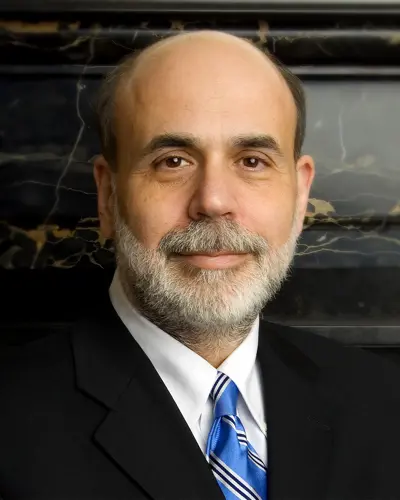
Ben Shalom Bernanke is an American economist at the Brookings Institution who served two terms as the 14th Chair of the Federal Reserve, from 2006 to 2014. During his tenure as chair, Bernanke oversaw the Federal Reserve's response to the late-2000s financial crisis, for which he was named the 2009 Time Person of the Year. Before becoming Federal Reserve chair, Bernanke was a tenured professor at Princeton University and chaired the department of economics there from 1996 to September 2002, when he went on public service leave.
