Calvin Coolidge Quotes
The President cannot, with success, constantly appeal to the country. After a time he will get no response.
Calvin Coolidge, 1872-1933, 30th President of the United States (Republican, MA), Autobiography
Sourced by: Eigen's Political and Historical Quotations


Referring to President Bush's winning a roll-call vote in the House on lowering the capital gains tax:


Churchill and the British Military wanted to start the offensive against Hitler by attacking and dislodging the Germans and Italians in North Africa and then attacking Italy before attacking France. The American military Generals wanted to attack France first and did not want an African campaign to divert from the main objective. However, France would take much longer to prepare for, and Americans were very anxious to have our forces go on the offensive. Roosevelt overruled the Generals and sided with Churchill also arguing that rolling up some victories in North Africa would be good for American morale and give us more time to produce more tanks, plans and other munitions which were then rolling off the assembly lines and an incredible clip. Churchill also advised that American troops were green and Africa would be good preparation. It turned out that this was the better course of action.


The reference was to President George W. Bush.


In American politics, the politicians who tend to have the most certain views of how America’s military should fight, are often those who have never served in the military themselves. The same is often true for newspaper editors and publishers. Few military officers in every war have expressed these sentiments publicly, but there are even fewer who have not thought it.


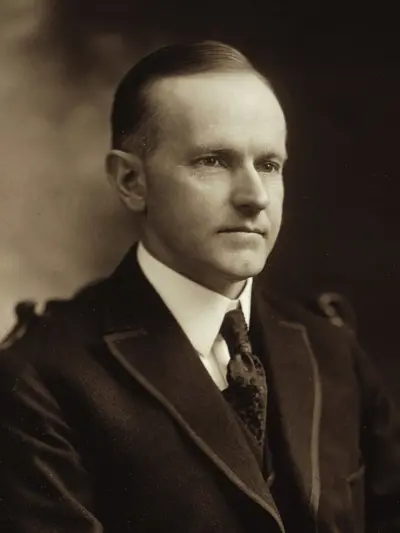
Calvin Coolidge was an American lawyer and politician who served as the 30th president of the United States from 1923 to 1929. A Republican lawyer from New England, born in Vermont, Coolidge worked his way up the ladder of Massachusetts state politics, eventually becoming governor of Massachusetts. His response to the Boston Police Strike of 1919 thrust him into the national spotlight and gave him a reputation as a man of decisive action. The next year, he was elected the 29th vice president of the United States, and he succeeded to the presidency upon the sudden death of Warren G. Harding in 1923. Elected in his own right in 1924, he gained a reputation as a small-government conservative and also as a man who said very little and had a rather dry sense of humor.
