Mary Parker Follett Quotes
the point of educating instead of blaming seems to me very important. For nothing stultifies one more than being blamed. Moreover, if the question is, who is to blame?, perhaps each will want to place the blame on someone else, or on the other hand, someone may try to shield his fellow-worker. In either case the attempt is to hide the error and if this is done the error cannot be corrected.
Follett, Mary Parker. Dynamic Administration: The Collected Papers of Mary Parker Follett. Edited by Henry C. Metcalf and L. Urwick, Harper & Brothers, 1941, p. 272.


He was very aware that there were three factors inhibiting staff members from speaking up to criticize a plan: Junior officers a reluctant to take a position that is in opposition to their superiors; many attendees see themselves as institutional representatives of their organization or sub organization and are reluctant to take a position different from that which was taken by the organization; after months of planning and the vast majority of other staff in support of a plan, most people are intimidated from raising a dissident point of view especially if they are the only one in the group with that view. Presidents, agency heads, commanders, and other leaders all face this problem. However many do not want any dissident opinions at the late stages of a planning process. The better leaders however do want those outlier opinions especially at the later stages. Eisenhower usually went out of his way to emphasize his desire for honest criticism and chided others who did not like criticism—see {637081} ,


See {630835} for a similar statement.


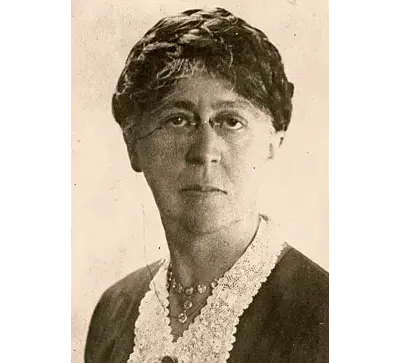
Mary Parker Follett was an American social worker, management consultant, philosopher and pioneer in the fields of organizational theory and organizational behavior. Along with Lillian Gilbreth, she was one of two great women management experts in the early days of classical management theory. She has been called the "Mother of Modern Management". Instead of emphasizing industrial and mechanical components, she advocated for what she saw as the far more important human element, regarding people as the most valuable commodity present within any business. She was one of the first theorists to actively write about and explore the role people had on effective management, and discuss the importance of learning to deal with and promote positive human relations as a fundamental aspect of the industrial sector.
