Dwight D. Eisenhower Quotes
I consider it to be the duty of anyone who sees a flaw in the plan not to hesitate to say so.
He was very aware that there were three factors inhibiting staff members from speaking up to criticize a plan: Junior officers a reluctant to take a position that is in opposition to their superiors; many attendees see themselves as institutional representatives of their organization or sub organization and are reluctant to take a position different from that which was taken by the organization; after months of planning and the vast majority of other staff in support of a plan, most people are intimidated from raising a dissident point of view especially if they are the only one in the group with that view. Presidents, agency heads, commanders, and other leaders all face this problem. However many do not want any dissident opinions at the late stages of a planning process. The better leaders however do want those outlier opinions especially at the later stages. Eisenhower usually went out of his way to emphasize his desire for honest criticism and chided others who did not like criticism—see {637081} ,
Dwight D. Eisenhower, 1890-1969, 34th President of the United States (Republican, KS), Statement at the WWII general staff meeting to give the go-ahead for Overlord—the D-Day invasion of France, June 5, 1944
Sourced by: Eigen's Political and Historical Quotations

One of the targets of this statement was British General Viscount Montgomery, a brilliant, creative and courageous military leader, with a huge ego who tended to be very formal and had a very thin skin.


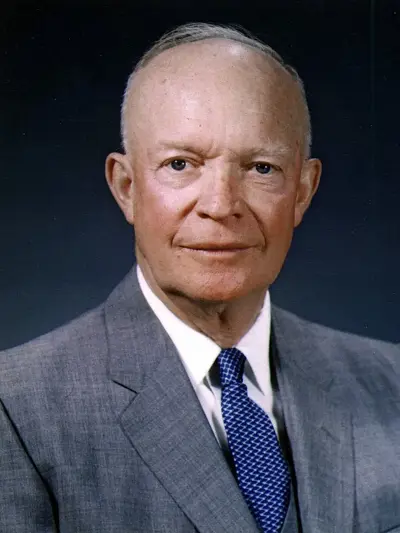
- Born: October 14, 1890
- Died: March 28, 1969
- Nationality: American
- Profession: President
Dwight David "Ike" Eisenhower GCB OM GCS CCLH KC NPk was an American military officer and statesman who served as the 34th president of the United States from 1953 to 1961. During World War II, he became a five-star general in the Army and served as Supreme Commander of the Allied Expeditionary Force in Europe. He was responsible for planning and supervising the invasion of North Africa in Operation Torch in 1942–43 and the successful invasion of Normandy in 1944–45 from the Western Front.
