John Stuart Mill Quotes
The people who exercise the power are not always the same people over whom it is exercised.
John Stuart Mill, 1806-1873, Member of Parliament, British Political Economist, On Liberty, 1859
Sourced by: Eigen's Political and Historical Quotations


In the Nez Perce and most other Native American societies, there were Chiefs and occasionally, for special circumstances, War Chiefs, but few if any other officials, thus producing a very flat, egalitarian society. But the whites had many layers of bureaucrats and petty officials. Governors, The President, Members of Congress, State Legislators, Generals, Sheriffs, Indian Agents, tax collectors, and the like. On the Papago Indian reservation, there was great difficulty on a construction project as even the concept of a work foreman was an uncomfortable notion. No Papago wanted to be directed or ordered about by anyone else even on a work gang. And do no one wanted to assume a position of authority or be responsive to a fellow other than the Chief and the tribal elders.


Johansson is describing the origin of the word “hegemony.” During the 5th Century B.C. Athens and their allies formed the Delian League to combat the Persian Empire. Athens, as the most powerful city-state in Ancient Greece, controlled the alliance and the League soon turned into the Athenian “empire” or “hegemony.”


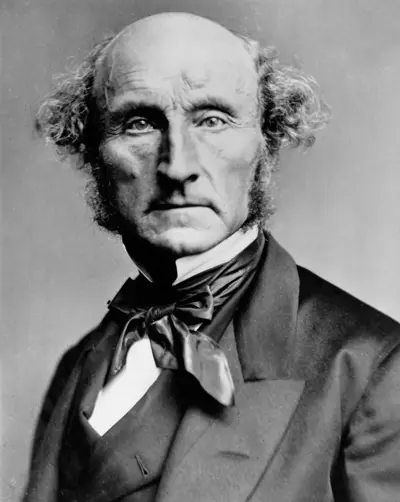
John Stuart Mill, usually cited as J. S. Mill, was an English philosopher, political economist, Member of Parliament, and civil servant. One of the most influential thinkers in the history of classical liberalism, he contributed widely to social theory, political theory, and political economy. Dubbed "the most influential English-speaking philosopher of the nineteenth century", he conceived of liberty as justifying the freedom of the individual in opposition to unlimited state and social control.
