John L. Lewis Quotes
The organization and constant onward sweep of this movement exemplifies the resentment of the many toward the selfishness, greed and the neglect of the few.
Lewis, John L. "Labor and the Nation." Vital Speeches of the Day, vol. 3, no. 23, 15 Sept. 1937, p. 731.


He was writing about America and many of the industrial democracies who at the time, as a result of globalziation, technology, government action and inaction, and other factors, had gone through a 30 year period of increasing disparities.


The term “rugged individualism” was used at the time be very conservatives and the very wealthy to describe business leladers with words that had very good public connotations. They argued that it would be undesirable to curtail their individualism that was so important by any government regulations or laws that would limit what the business leaders could do. However, the reality was that these very successful and powerful “rugged individualists” had regimented most everyone else—employees, consumers, and small businessmen who might sell them services or products. To Tugwell, if the wealthy and powerful few had no restrictions on their individualism, there would be precious little individualism for most of society. He sought a balance of regulating the individualism and prerogatives of the few somewhat in order to allow the vast majority of people to be able to have individuality as well.


Diamond’s observation refers to major technologies like farming and ability to use metals.


Ingersoll was considered to be the greatest orator and political thinker of his day, but his overt atheistic views curtailed his elected political career.


The Supreme Court had ruled that there could be no limits placed on the amount of money that could be spent by a rich company or person to campaign for a candidate. It would deny them their right to freedom of speech. That was the context of Hollings’ remark.


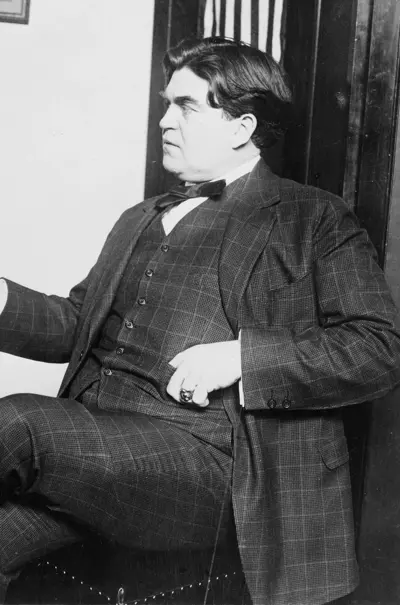
John Llewellyn Lewis was an American leader of organized labor who served as president of the United Mine Workers of America (UMW) from 1920 to 1960. A major player in the history of coal mining, he was the driving force behind the founding of the Congress of Industrial Organizations (CIO), which established the United Steel Workers of America and helped organize millions of other industrial workers in the 1930s, during the Great Depression. After resigning as head of the CIO in 1941, Lewis took the United Mine Workers out of the CIO in 1942 and in 1944 took the union into the American Federation of Labor (AFL).
