John Stuart Mill Quotes
The opening of a foreign trade, by making them acquainted with new objects, or tempting them by the easier acquisition of things which they had not previously thought attainable, sometimes works a sort of industrial revolution in a country whose resources were previously undeveloped for want of energy and ambition in the people: inducing those who were satisfied with scanty comforts and little work, to work harder for the gratification of their new tastes, and even to save, and accumulate capital, for the still more complete satisfaction of those tastes at a future time.
Mill, John Stuart. Principles of Political Economy. Vol. 2, John W. Parker, 1848, p. 119.


This quotation is an amazing prediction that was 100 years in the future. China had a mercantile culture and tradition that was suppressed and controlled by the Emperors, the Europeans, the Nationalist Chinese, the Japanese, and finally the Communists who finally found a way to provide commercial freedom if not political, religious, and cultural liberty. But the talent for commerce was clear even 100 years ago to those who were broadminded enough to see it behind the antl-Asian prejudice of the 19th and early 20th century.


The changes he wrought were many and profound and were rejected years later when his party was voted out of office so markedly that the only retained 2 seats in the parliament and lost their status as an official Canadian party.


10 centuries ago was a time when the Arabs were far more advanced and modern than other cultures including the Christian West that was in the Dark Ages. However, in the 12th century there was a “closing”—a narrowing of allowable Islamic thinking, and since then, Islamic people have had great difficulty with change or modernity. Not all Muslim nations are equally rigid but the Arabs are at the extreme among Islamic counties.
Ataturk, trying to modernize Turkey was attempting it in a single generation and to a great extent succeeded.


This is an incredibly prescient quotation. Dewey saw globalization starting before most realized the change. He wrote this in 1916. Almost a century later, we live with the results of the process that he described.


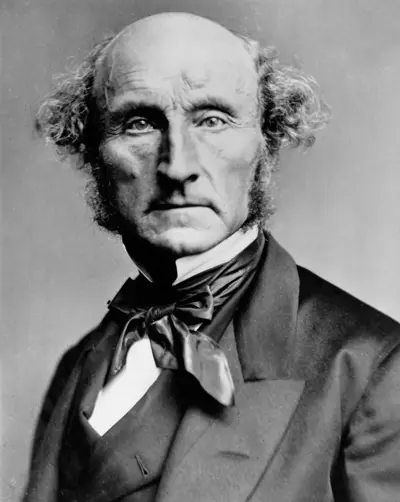
John Stuart Mill, usually cited as J. S. Mill, was an English philosopher, political economist, Member of Parliament, and civil servant. One of the most influential thinkers in the history of classical liberalism, he contributed widely to social theory, political theory, and political economy. Dubbed "the most influential English-speaking philosopher of the nineteenth century", he conceived of liberty as justifying the freedom of the individual in opposition to unlimited state and social control.
