Roman Dmowski Quotes
The only salvation for us is to stop being an incoherent, loose mob and to change into a strongly organized, disciplined army.
Fascists organized their political parties as paramilitary organizations.
Roman Dmowski, 1864–1939, Polish Politician & Co-Founder of the Right Wing Endecja Fascist Movement, "Walka o prawo i organizacja narodowa", Przegląd Wszechpolski, vol. 9, June 1903
Sourced by: Eigen's Political and Historical Quotations


“Factions” was the word for Political Parties then. Henry, George Washington and other founding fathers were opposed to political parties, while Madison and others thought they needed to controlled. Jefferson thought parties to be important. So there was no uniform consensus among the Founding Fathers. This has his last public speech before his death.


The King was asking for volunteers for the British Army. What is particularly interesting about this quote is the overt appeal to “men of all classes.” This illustrates that there was an extensive class system then operational in Britain. Almost all people knew to which class they belonged. A very popular King could then make a statement like this and no one was critical of his referring to citizens by class distinctions. Even in modern times, Britain is a more class conscious society than America. The response to this appeal was very good, but the First World War developed in such a way that huge manpower resources were needed and the King had to reluctantly assent to a military draft 7 months later.


A. B. Magil

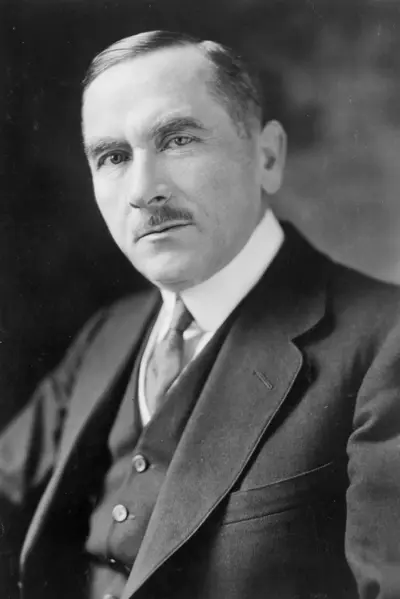
Roman Stanisław Dmowski was a Polish politician, statesman, and co-founder and chief ideologue of the National Democracy ("ND": in Polish, "Endecja") political movement. He saw the Germanization of Polish territories controlled by the German Empire as the major threat to Polish culture and therefore advocated a degree of accommodation with another power that had partitioned Poland, the Russian Empire. He favored the re-establishment of Polish independence by nonviolent means, and supported policies favorable to the Polish middle class. During World War I, in Paris, through his Polish National Committee he was a prominent spokesman, to the Allies for Polish aspirations. He was an instrumental figure in the postwar restoration of Poland's independent existence.
