Garrett Hardin Quotes
The only kind of coercion I recommend is mutual coercion, mutually agreed upon by the majority of the people affected.
Garrett Hardin, Human Ecologist Board Member Emeritus, Federation for American Immigration Reform, Commenting on the deportation of undocumented immigrants, The Tragedy of the Commons, 1968
Sourced by: Eigen's Political and Historical Quotations


The card was issued to all American troops in the theater. Similar versions were distributed to troops in Iraq, and other Arab countries.


Whithead’s view which seems intuitively right to most citizens, tends to be the one that the majority espouses but the minority opposes. At the time, the Republicans controlled the White House and there were a number of polarizing issues, where the Republicans could not obtain consensus and then decided. However, then the Democrats gained control of the White House and Congress the next year, it was the Democrats who claimed that they had to decide. The Republicans, now in the majority, argued that significant changes in America should not be made by narrow majorities and major issues should be tabled if there was no substantial majority. That was the position that the Democrats had espoused when they were in the minority.


In 1871 the congressman refused to serve as chairman of a committee to investigate the Ku Klux Klan. Such pandering to the South was common for politicians who had national aspirtation. If the politican served on such a committee, he would have to aknowledge the existance of the murders, torture, and other criminal activity of an organzation that was very popular in the South. Or he would have to cover up the KKK crimes and lose the support of Northerners. So refusing to serve on the committee was the prudent solution.


Husayn Ali Nuri. Some societies require consensus for action. Others act by majority vote. The Bahai founder set forth this process which attempts to get consensus, but if that fails, the majority then prevails.
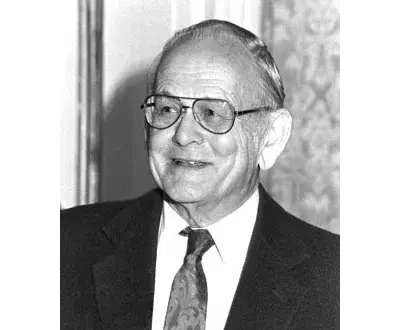
Garrett James Hardin was an American ecologist who warned of the dangers of human overpopulation. He is most known for his exposition of the tragedy of the commons, in a 1968 paper of the same title in Science, which called attention to "the damage that innocent actions by individuals can inflict on the environment". He is also known for Hardin's First Law of Human Ecology: "We can never do merely one thing. Any intrusion into nature has numerous effects, many of which are unpredictable.":112 He is listed by the Southern Poverty Law Center as a white nationalist, whose publications were "frank in their racism and quasi-fascist ethnonationalism".
