George Cary Eggleston Quotes
The one thing which we were left almost wholly without, during the war, was literature. Nobody thought of importing books through the blockade, to any adequate extent, and the facilities for publishing them, even if we had had authors to write them, were very poor indeed.
Eggleston was an accomplished writer who had served in the Confederate army of the Civil War. 20 year after the war he wrote a series of articles for the prestigious Northern Atlantic Monthly trying to convey the war from the Southerner’s point of view. Even before the Civil War, there was much less literature and book publishing in the South than the rest of the country. The illiteracy rate of the South was much higher due to the lesser support for public education in the Southern States than in the rest of the country. Even in the 21st century the South was behind the rest of the nation although the gap had closed considerably and Southern writers had become among the best in America.
George Cary Eggleston, 1839-1911, Writer & Confederate Soldier, “A Rebel's Recollections”, The Atlantic Monthly, 1874
Sourced by: Eigen's Political and Historical Quotations


Committee of the Congress. This was the prevailing Congressional and public view except for the South which had coalesced around an intellectual rationalization. See {618013}.


This quotation is fascinating because it illustrates the degree to which the Southern people censored themselves on what in most cultures would be morale issues. In many ways the ability to ignore reality made it easier for the Confederate government to operate, but distorted the decisions that were made. Arguably, in most other cultures, public opinion on the reality of the situation would have brought the war to an end sooner and ironically on far better terms than they ended up with. Eggleston was an accomplished writer who had served in the Confederate army of the Civil War. 20 year after the war he wrote a series of articles for the prestigious Northern Atlantic Monthly trying to convey the war from the Southerner’s point of view.

That is the way he was killed. The phrase, “We are bound to believe that, anyhow” indicates that Stuart really realized how futile the Southern war effort would be but loyalty and patriotism required him to suspend his rational belief structure.
These failure of these secession opponents to influence most Southerners was one of the great tragedies of the war. William Tecumseh Sherman also counseled against the rebellion {627900}. Identity of many Americans at the time was defined by their State with less identification with the nation than today. Eggleston was an accomplished writer who had served in the Confederate army of the Civil War. 20 year after the war he wrote a series of articles for the prestigious Northern Atlantic Monthly trying to convey the war from the Southerner’s point of view.

14 years after this statesmanlike speech, Davis flip flopped on this principle and became a firebrand and agitator and hawk for secession and war. It was the Southern upper class that controlled the politics of the South and were the ones who would suffer the greatest economic loss if the Union had continued in the direction of refusing to return runaway slaves and other abolitionist activity. Although many Southerners volunteered to fight for the confederacy, there were not enough and Davis, who in earlier years would not war unless there was genuine demand of the people, for the Civil War, the South had to resort to conscription. The North did as well.

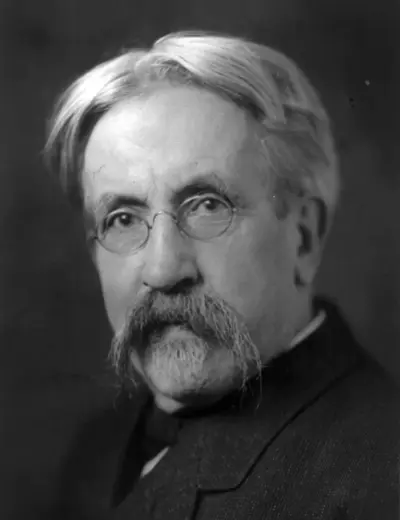
George Cary Eggleston American author and brother of fellow author Edward Eggleston (1837–1902). Sons of Joseph Cary Eggleston and Mary Jane Craig. After the American Civil War he published a serialized account of his time as a Confederate soldier in The Atlantic Monthly. These serialized articles were later collected and expanded upon and published under the title "A Rebel's Recollections."
