Lord Acton Quotes
The one pervading evil of democracy is the tyranny of the majority, or rather of that party, not always the majority, that succeeds, by force or fraud, in carrying elections.
John Emerich Edward Dalberg [Lord Acton], 1834-1902, English Historian and Member of Parliament (Liberal), “The History of Freedom”
Sourced by: Eigen's Political and Historical Quotations

Many disagree with Hook. While there are few total societies as examples, recently they point to Pakistan where the Islamic majority not only tyrannized non-Muslims, but even Muslims who are not devout enough. Hooks opponents argue that tyranny of the majority is generally exhibited in areas. For example, the white American majority tyrannized the Black minority for the first 150 years of American history. Within local and state governments there are many more examples of Tyranny of the Majority. The Mormons tyrannized non Mormons when they first settled the Utah territory. The Mormons themselves had been tyrannized by Christian majorities throughout their trek from New York State to Utah.


This quotation is historically important because Davis clearly states the reason for the rebellion of the South. The anti-slave states were growing at a greater rate than the slave states and despite the greater voting power that a southerner had (a result of the 3/5 count of slaves for census purposes, and the Senate), the handwriting was on the wall and the majority of the United States was against the vicious institution of slavery and would make it unprofitable, impossible and/or illegal in the coming years. Southern slavery advocates saw this as a “tyranny of the majority” and therefore took up arms. In the early 20th century, apologists for the Southern rebellion tried to promote the idea that there were reasons other than slavery, but this quotation and the resolutions of the states who withdrew from the Union make it clear that the right to maintain slavery was the only significant issue. In that sense it was a States’ Rights issue, but the South was opposed to States’ Rights when it came to States refusing to return fugitive slaves when Federal Law required such under the Dred Scott Supreme Court Decision.


See {639974} and {638572} for quotations going one step further.


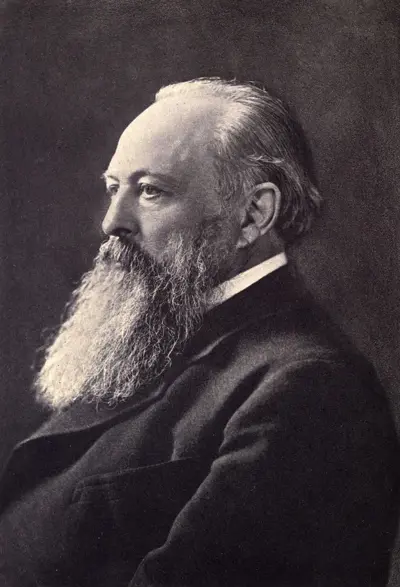
John Emerich Edward Dalberg-Acton, 1st Baron Acton, 13th Marquess of Groppoli, better known as Lord Acton, was an English Catholic historian, politician, and writer. He was the only son of Sir Ferdinand Dalberg-Acton, 7th Baronet, and a grandson of the Neapolitan admiral and prime minister Sir John Acton, 6th Baronet. Between 1837 and 1869 he was known as Sir John Dalberg-Acton, 8th Baronet.
