Billy Sunday Quotes
The one argument in favor of the saloon is that the taxes from the saloon are needed. You show me communities where they have none, where the taxation, my friends, is higher than in communities where they have. Everybody with a scintilla of decency and brains knows that it is the saloon that raises the rate of taxation in the country all over. Seventy-five per cent of our idiots came from intemperate parents, and there are more insane people in the United States, made insane by drink, than there are students in the universities and colleges. One out of every three hundred and eighty-three in Pennsylvania in 1911 were either in the insane asylum or the home for feeble-minded, and New York, New Jersey, Pennsylvania and Illinois are the worst whisky-dominated, whisky-damned and whisky-controlled states in the Union; and there is no state in the Union where the liquor interests are more strongly allied and entrenched than they are in the state of New York.
William Ashley Sunday. Sunday and many other prohibitionists then believed that mental retardation was caused by parents who drank alcohol extensively. What we know today is that a pregnant woman drinking can cause Fetal Alcohol Syndrome and affect the intellect of the fetus when growing up. It was true that the alcohol industry had undue influence in many states. However, with prohibition, organized crime then gained even more influence upon state and local government, and America had gone from bad to worse.
Billy Sunday, 1862-1935Professional Baseball Player & Christian Evangelist, Sermon, Atlanta, GA, December 1917
Sourced by: Eigen's Political and Historical Quotations


Samuel Langhorne Clemens, 1835-1910. The Congressmen who voted for Prohibition in the next century had not read or believed this quotation of Twain’s.

Sunday was a leading prohibitionist.


When Washington was younger and running for the colonial Virginia assembly, he bought beer and rum for all the voters in his precinct. He did not then realize the damage that alcohol can do. One of the commonalities between Lincoln and Washington were their experience in seeing alcohol cause the death and/or ruination of many. See {630832}.


Despite the known link to crime, and the fact that alcohol kills many times more Americans that do illicit drugs, Mr. Bennett and most of his successors did not target drinking in their various war on drug efforts despite the fact that alcohol is a much more dangerous and addicting drug than any of the illicit drugs. In the George W, Bush administration, health authorities in the government were ordered not to tell the public that alcohol was a drug despite the fact that all the Surgeon Generals and medical science has explained that it is not only a dangerous drug, but is a drug that induces violence more so than any other drug. The alcohol lobby did not want the public to associate the alcohol industry with the evils that drug dealers produce, so they used their political clout with the Bush administration for whom the industry provided large political contributions as well as conservative political consultants.


She was a baroness—a member of the aristocracy who was a social reformer


One of the commonalities between Lincoln and Washington were there experience in seeing alcohol cause the death and/or ruination of many. See {630833}.
The authenticity of this quotation has been in contention for years. While many sources attributed this statement to Lincoln, no one has ever found a document in which it appears. Further, it was so clearly consonant with the anti-Prohibition argument that we suspected it as a “Phantom Quotation” (See http://politicalquotes.org/node/4063). As a result, we did not include this quotation until March of 2014. The reason we changed our mind was a newspaper article that was pointed out to us, and after reading it, we tilted in favor of inclusion. The article is http://druglibrary.org/schaffer/LincolnQuote/lpq0001.jpg


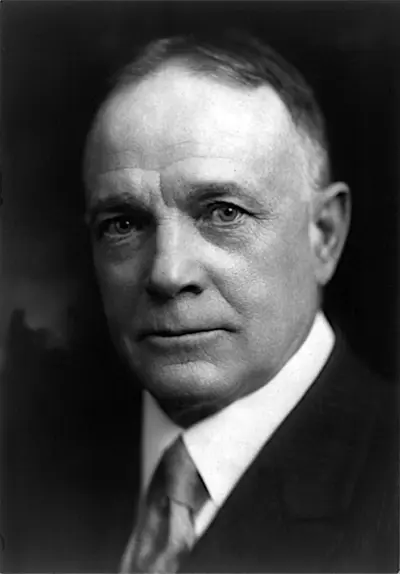
William Ashley Sunday was an American outfielder in baseball's National League and widely considered the most influential American evangelist during the first two decades of the 20th century.
