John Byng Quotes
The next morning we saw nothing of the enemy, though we were still lying to.
Byng, John. "Admiral Byng's Letter to Mr. Clevland, Secretary of the Admiralty." The Gentleman's Magazine, vol. 26, D. Henry and R. Cave, 1756, p. 313.


The sloop Margaretta was escorting 2 small merchant vessels came into the port of Machias, Massachusetts to purchase some lumber and firewood. However the commanding officer of Margaretta did not like the terms of the negotiations and threatened the town. An aroused and angry group of patriots then boarded and attacked the two merchant ships. The commander of Margaretta then maneuvered out of the port having lost the two small ships. But the Patriots were angry with the commander of the sloop and being excellent seamen who knew the local waters, used one of the merchant ships and a small local vessel to chase down the Naval sloop. They then boarded and captured Margaretta and fatally wounded the commander, James Moore. While Lexington was the first land victory for the patriots, this was the first sea victory and the Margaretta was the first British warship that was captured by the Patriots.


This document was used at the trials of the Japanese War Criminal at the end of WWII. However, MacArthur would not allow the prosecution of all who were guilty of murdering helpless crews of Allied ships after they were disabled. He just wanted a few examples and even would not try the Emperor whom he felt was more useful in his position than as a criminal.

This quotation illustrated a military phenomenon whereby leading military commanders are important as long as they have and control many military assets. Therefore, they avoid serious battles where the might lose. Preserving assets becomes more important than the war objectives and honor and reputation trumps contribution to the war effort. History remembers well military leaders who battle and win. It also remembers leaders who control many assets and who do not lose or win. But the losing military leaders are consigned to the “dustbin of history”.


In 1913 New York Governor Sulzer decided to try and reform the political corruption and control of Tammany Hall over New York State's political system. In response, the Tammany-dominated legislature impeached Sulzer for campaign fund irregularities. After he was removed from office, the only governor in New York State history to suffer such a fate, a disappointed, angry crowd gathered outside the governor's mansion, calling for a speech. The ex governor was presented with a loving cup with the following inscription engraved: “Presented to Hon. William Sulzer by citizens of Albany in Loving Remembrance of Duties Well Performed. A Martyr to the Cause of Honest Government.” The phrase that "no question is ever settled until it is settled right" seems to have originated in another poem. See Ella Wheeler Wilcox.


He didn’t succeed until Mahan wrote his marvelous treatise.
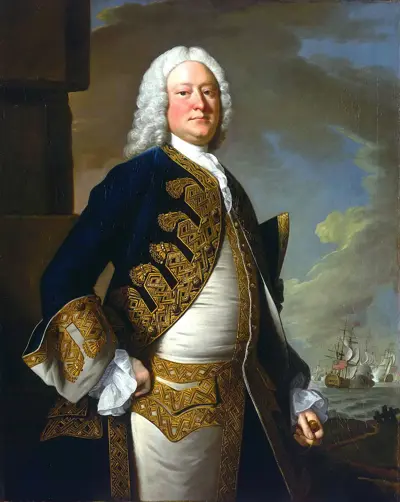
Admiral John Byng was a British Royal Navy officer who was court-martialled and executed by firing squad. After joining the navy at the age of thirteen, he participated at the Battle of Cape Passaro in 1718. Over the next thirty years he built up a reputation as a solid naval officer and received promotion to vice-admiral in 1747. He also served as Commodore-Governor of Newfoundland Colony in 1742, Commander-in-Chief, Leith, 1745 to 1746 and was a member of Parliament from 1751 until his death.
