Edward Grey Quotes
The Navy and the foreign office had to find the argument to support the action; it was anxious work.
Early in the first world war, the British "extended" the traditional legal concept of a blockade:
Edward Grey [Viscount Fallodon], 1862-1933, British Foreign Secretary (Liberal), Twenty-Five Years, 1892-1916, 1925
Sourced by: Eigen's Political and Historical Quotations


She was decrying a practice where the Untied States would not negotiate or meet directly with Iran and were communicating diplomatically through other nations diplomats.

Ironically, Lieberman was using this quotation to campaign against Bush’s son, George W. Bush.


Iraq’s program of mass destruction weapons development


The report was from Heinrich von Tschirschky, the German ambassador to Austria-Hungary. He recommended that Germany persuade Austria-Hungary to not attack Serbia, not realizing the German leaders had already planned a war with Russia and saw the issues between the Austro-Hungarian Empire and Serbia was a good excuse to implement their war plans (see {642092}).


Roosevelt had withdrawn his Ambassador to Berlin, publicly reprimanded Joseph P. Kennedy, his Ambassador to England who was pro Fascist and who had said complementary things about Hitler and Mussolini. FDR made anti-German statements to a degree unknown for a country not at war. Hitler publically stated that the Germans would not be pressured. Dictators who U. S. leaders have tried to isolate and pressure, have made similar statements ever since. The American intervention was certainly effective against Hitler.

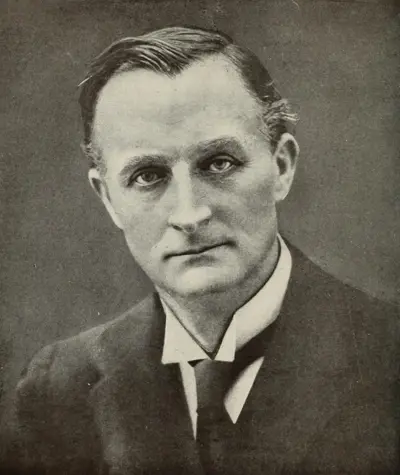
Edward Grey, 1st Viscount Grey of Fallodon, KG, PC, DL, FZS, better known as Sir Edward Grey, was a British Liberal statesman and the main force behind British foreign policy in the era of the First World War.
