Lysander Spooner Quotes
The 'nations,' as they are called, with whom our pretended ambassadors, secretaries, presidents, and senators profess to make treaties, are as much myths as our own. On general principles of law and reason, there are no such 'nations.' ... Our pretended treaties, then, being made with no legitimate or bona fide nations, or representatives of nations, and being made, on our part, by persons who have no legitimate authority to act for us, have intrinsically no more validity than a pretended treaty made by the Man in the Moon with the king of the Pleiades.
Spooner, Lysander. No Treason No. VI: The Constitution of No Authority. Published by the Author, 1870, pp. 49-50.


The Constitution was not drafted until 1787 and was ratified later. In the interim the young United States functioned under the Articles of Confederation, in a sense, our first Constitution. This clause established that the Federal Government should have the exclusive power and authority to conduct foreign affairs.


Dulles lied to Congress. The CIA at the time was supplying planes and American pilots in support of an anti-Sukarno Government faction that was in armed revolt. It is not clear whether or not Dulles knew the truth when he had so testified.


The basic treaty sold some of Ethiopia’s colonial territory (Eritrea and Tigray) to Italy in exchange for arms. Italy had tried to conquer the area but lost 500 men in the Battle of Dogali. However, after this peace treaty, Italy maintained that Article 17 of the treaty gave them the right to declare Ethiopia an Italian Protectorate which they did. However, there were two different versions of the treaty that the Italians had drawn up—one in Italian, the other in Aramaic. Britain, Belgium and Germany supported Italy; France, Turkey and Russia supported Ethiopia. Menelik then, to make matters clear, repudiated the treaty in 1893. Italy send an invasion force that was soundly thrashed by the Ethiopians setting the stage for the Italian attack on Ethiopia in World War II years later. Parties to International treaties thereafter have paid close attention to the different language versions.


You simply do not do that to a head of a democratic state wanting to cross [fly] over your airspace.
American (traitor of whistleblower depending on who is judging) Edward Snowden was in the Moscow International Airport seeking political asylum from several nations. The United States, wanting to extradite and try Snowden criminally had “intelligence” that Snowden was going to fly out of Russia in the private plane of Bolivian President Morales. The U.S. persuaded the European countries to refuse his plan “flyover” rights—usually a formality that is always granted for a foreign head of state. This forced Morales to land his plane for refueling in Austria where, under pressure from the United States, Austrian law enforcement officials boarded and searched the plane—something that is almost never done to a plane that is just refueling, much less the airplane of a head of state. The Secretary General was expressing the outrage of the OAS nations (and many others around the world). What made the situation even more embarrassing for the United States, Austria, and the other European nations which did not grant flyover rights, was the fact that the U. S. Intelligence was totally wrong. Snowden was not on the plane forcing the Austrians who had technically committed an act of war against Bolivia by forcing their way onto a Bolivian plane carrying diplomats and the president of Bolivia, to apologize. Snowden was still in Russia, and the Russians then gave him political asylum in large part because they too resented the behavior of Austria, Europe and above all the United States in the Bolivian plane incident as the pane had taken off from Moscow. This was a very difficult call for the American intelligence agencies, in that there may well have been a plan to put Snowden in that plane that was cancelled when it was clear that the Americans would try and intercept the plane somehow. The OAS and other complaining nations argued that even if Snowden had been on the plane, there was no right to intercept and search the plane anyway.


There have been times in democracies where a foreign ministry (State Department) is isolated from the elected politicians and implements a foreign policy that is at odds with the wishes of the elected officials and the majority of the nation. A good American example of this was in 1948 where America had to decide whether to support the creation of the State of Israel in the United Nations and through diplomatic recognition. The professional diplomats in the State Department had developed very close relations with Arab States, and many State Department employees were anti-Semitic. In addition, they thought the most important thing for America was not to risk the Arab oil supply. Meanwhile, the people, Congress, and President Truman were on the other side and Truman had to finally order The Secretary of State to stop his professional diplomats from pursuing their own foreign policy preferences. Even then some did not.

There is no court structure that handles International law disputes. There are some international bodies that hear some types of international law disputes, but no general mechanism. The procedures of these few bodies are very complex and arcane. But worse, there is no body with any power that can enforce any decision that may be reached. Enforcement depends on the good will of the nations involved or the pressure that can be brought to bear by other counties.


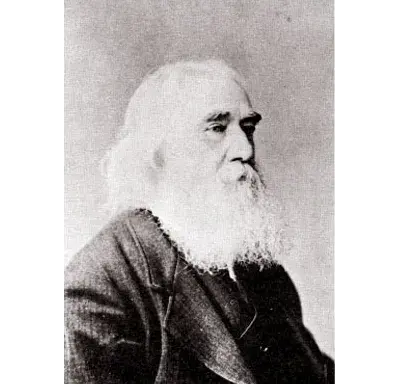
Lysander Spooner was an American individualist anarchist. He was also an abolitionist, entrepreneur, essayist, legal theorist, pamphletist, political philosopher, Unitarian, writer and a member of the First International.
