Khmer Rouge Quotes
Absolutely get rid of CIA agents from units and the territory of Cambodia.
Cambodian Khmer Rouge Slogan, 1970s
Sourced by: Eigen's Political and Historical Quotations


In her younger days Steinham worked with the CIA. Originally the Office of Strategic Service, the precursor to the CIA, was an amalgam of some of the nation’s most educated and dedicated people who tended to be very idealistic in saving the world from fascists like Nazi Germany and Japan. The were extremely nonpolitical and were not involved in the liberal conservative battles that the agency got itself into as the Red Scare and the fear of Communism affected much of the society including the CIA.

Precursor to CIA. During WWII Donovan’s OSS, the FBI and the State Department had the three civilian intelligence organizations while each of the 4 Armed Services had their own intelligence services. Rarely did any of these 7 organizations communicate with any of the others. In the case of the OSS, the FBI and the military services tended to try and obstruct many of their operations. This was the first call for what became the CIA.


Dulles lied to Congress. The CIA at the time was supplying planes and American pilots in support of an anti-Sukarno Government faction that was in armed revolt. It is not clear whether or not Dulles knew the truth when he had so testified.

In 1944 the French wanted to establish an intelligence operation in Washington:

This was meant as a criticism of Webster, but must people saw it as a compliment. What Clarridge and other old hands at the CIA could never get straight was that they were supposed to break the other countries’ laws but not the laws of the United States. They were supposed to lie to other countries, but not to our President and Congress. This has been a constant problem for United States intelligence agencies. Some scholars of espionage believe that a good spy or spy master lies so often that it is part of his nature to do so as well as break laws. Psychologically it is difficult for them not to lie to anyone and they have little respect for laws. Webster fired Clarridge when Webster reformed the CIA but in the process he alienated most of the “veterans”.


He was not referring to economic corruption but intellectual and moral corruption. Regan who appointed many excellent key officials picked a very unfortunate choice to lead the CIA. William J. Casey had many faults and weaknesses—See {637472}, {636743} and {637469}. But the worst of his damage was imposing his ideology on the agency and having the intelligence analysts shape their intellectual product to conform with a particular world, political, and religious view. See {634408}. This became acceptable and as future administrations took power their ideologies were considered by the CIA professionals and reports were edited and shaped accordingly. Reform was instituted by some of the future CIA directors but there were precedents from the Casey days for years. One particularly bad manifestation of this intellectual corruption occurred when Vice President Richard Cheney imposed a neocon world view on the agency with a pliant CIA director and the agency gave the President a totally inaccurate assessment of Iraq nuclear capability and intention which triggered the disastrous Iraq war, made all the worse when there were not only no nuclear weapons in Iraq as had been reported, but there was not even a single laboratory trying to develop nuclear weapons or even nuclear power.


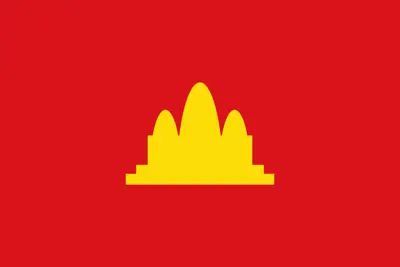
The Khmer Rouge (/kəˌmɛər ˈruːʒ/, French: [kmɛʁ ʁuʒ]; Khmer: ខ្មែរក្រហម, Khmêkrâhâm [kʰmae krɑˈhɑːm]; "Red Khmers") is the name that was popularly given to members of the Communist Party of Kampuchea (CPK) and by extension to the regime through which the CPK ruled Cambodia between 1975 and 1979. The name was coined in the 1960s by Norodom Sihanouk to describe his country's heterogeneous, communist-led dissidents, with whom he allied after his 1970 overthrow.
