Romesh Gunesekera Quotes
The nationalist movement supported Sinhala by suppressing Tamil; there were competing nationalisms. It was a fundamental mistake to make parallel streams in education - or a calculated political gamble. Politicians were playing with it.

Russia, under the Czars, controlled Moldova and part of Romania. In those area the upper and middle class was educated in Russian schools and most became assimilated. However, the Czars saw education of the their feudal peasants as anathema (not unlike the American Slaveowners were opposed to educating slaves). As a result, the Romanian peasants never became Russified.


When the former Soviet republics were in the Soviet Union, ethnic Russians were often against their will forced to the Republic so it can be Russified. These ethnic Russians had higher status with the Soviet government and the local people resented them for that and for trying to change their culture. With the breakup of the Soviet Union, many people took out their resentment on the ethnic Russians by various form of official and unofficial discrimination. For example, in 2014 when the Ukrainians revolted and ousted the pro-Russian President, the new legislature, as one of its first acts, banned the use of the Russian language on schools and in all official government forms and activities. Although the new President vetoed the ban and it never became law, the vast majority of the legislators would gladly discriminate against the ethnic Russians legally as well as socially and personally. The Russian government, decided to be the “protectors” of the ethnic Russians. This conveniently also gave them a “justification” of seizing and annexing the Crimea which had been part of Ukraine.


This appears to be the first political reference to the phrase 'iron curtain.' The origin probably stems from the iron curtain used as a safety device in theaters in the days of gaslights and candles. Nazi Propaganda Minister Goebbels used the phrase in World War II {601664} and Churchill {411311} made it famous after the war. It is not known if any of them had known of Crile’s work.
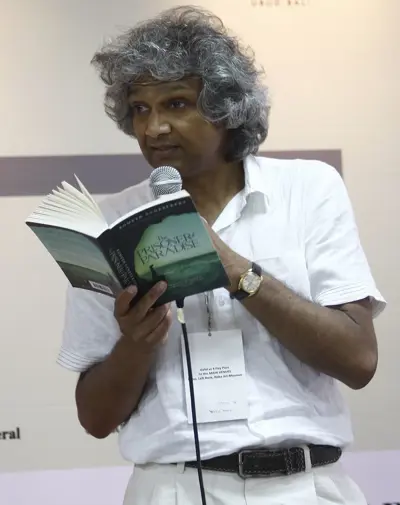
Romesh Gunesekera FRSL (born 1954) is a Sri Lankan-born British author, who was shortlisted for the Man Booker Prize for his novel Reef in 1994. He has judged a number of literary prizes and was Chair of the judges of Commonwealth Short Story Prize competition for 2015.
