David Hume Quotes
The nation was very little accustomed at that time [1625] to the burden of taxes, and had never opened their purses in any degree for supporting their sovereign.
David Hume, 1711-1776, Scottish Philosopher & Historian, The History of Great Britain, 1780
Sourced by: Eigen's Political and Historical Quotations


“Commercial imposts” are customs duties. These actually provided virtually all of the tax revenue for the early American nation. Hamilton, realized, and prepared those who would ratify the Constitution that there would have to be additional forms of revenue of the growing nation. Nonetheless, there are a few today who argue that the customs duties are the only legitimate form of Federal taxation as that was what was in existence in early America. This quotation shows that the founding fathers did not intend that the nation be bound to that single mode of taxation.


There are some in America who believe that progressive taxation where the rich pay at a higher rate was an invention of the New Deal and FDR. As this quotation shows, it was a well understood and debated concept before there was a United States.


This inverse relationship between rate of taxation and revenue sometimes is referred to as the Khaldun-Laffer Curve or the Laffer Curve. However, Khaldun appears to by the first to document the relationship, David Hume, Keynes, and others have since. This quotation’s exact source is unknown and may possibly be a bogus quotation as it reflects a classic view of one of the partisan political philosophies. However, there are several references and for now we lean toward accepting it as authentic. Khaldun was one of the world’s greatest polymaths who among his other accomplishments was the “Father of Sociology” and was the leading Islamic intellectual of his era.

Clinton, a great leader in free public education was a realist and saw this as the primary problem to be overcome in providing public education.


See {634234} and {634238} for more of his arguments at the Ratification Convention.


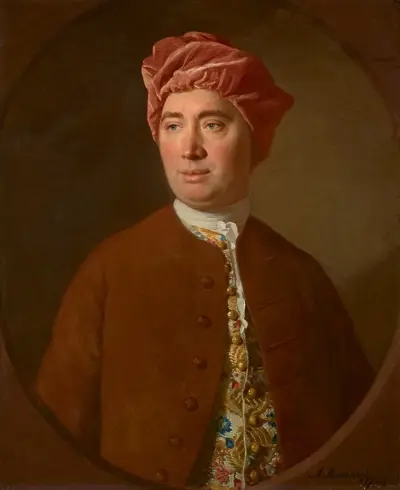
David Hume, Hume strove to create a naturalistic science of man that examined the psychological basis of human nature. Hume argued against the existence of innate ideas, positing that all human knowledge derives solely from experience. This places him with Francis Bacon, Thomas Hobbes, John Locke, and George Berkeley as a British Empiricist.
