Grace H. Knapp Quotes
The Moslems who did not succeed in escaping [the city of Bitlis] were put to death...
The Armenian-Turkish enmity was vicious to the point that each people tried to kill and exterminate the other—men women and children. The atrocities committed by the Armenians were unfortunately matched by the Turks in what is now referred to as the “Armenian Genocide”—see {51838} The armed combatants amongst Turks and Armenians were in the minority yet each side slaughtered all members of the other whenever they could. The hatred still prevails – see {588211}. And Turks and Armenians both still accuse the other of atrocities of the period and appear in denial about their own violence.
Grace H. Knapp, 1870-1953, Writer and Relief Worker, Editorial Board, American Committee for Armenian and Syrian Relief, Editor, American Board of Commissioners for Foreign Missions, The Tragedy of Bitlis, 1919
Sourced by: Eigen's Political and Historical Quotations

Jinnah and other Muslim leaders had stirred up the Muslims to violence to put pressure on all the parties to accede to Jinnah's Muslim League's demand of an independent Muslim nation—Pakistan. Messervy was very sympathetic to the Muslim leadership as he had been feuding with and frustrated by the predominantly Hindu ruling Congress Party. After partition he accepted the mercenary position of Commander in Chief of the Pakistani Army. Then he was shocked and horrified at the slaughter of the terrorist attacks by the Muslims—about 4,000 Sikh men, women and children had been beaten and cut to death. The Sikhs had been targeted largely because Sikh leaders had recently announced that if there were a Partition, Sikhs would refuse to live in nation under Muslim control.


The German catastrophic classification of people as superior and inferior did not start with the Nazis. It had been part of the German culture. What many feel makes Bismarck more cold-blooded than most Germans is that the latter were led to a hatred of the other ethnicities and would exterminate them for that reason, but Bismark had sympathy for the Poles yet advocated genocide simply on practical grounds. The analogy with the wolf shows this mentality at its worst.

The Armenian-Turkish enmity was vicious to the point that each people tried to kill and exterminate the other—men women and children. The atrocities committed by the Armenians were unfortunately greatly exceeded by the Turks in what is now often referred to as the “Armenian Genocide”—see {51838}, {631062} and {61904}. Armenians were in the minority yet each side slaughtered members of the other whenever they could. The Ottoman Turks were much better at it. The hatred still prevails – see {588211}. And Turks and Armenians both still accuse the other of atrocities during the period and appear in denial about their own violence.
He was a brutal, sadistic war criminal who was assassinated by one of his many enemies in 2000 before he could be brought to trial.
One of the most murderous struggles in history was when Turkey was fighting Armenia. The peoples had, and still do have, a great hatred towards each other. The Turks had a large ethnic Armenian population and the Turkish government decided to “relocate” them. In the process many Armenians were brutally murdered, The Armenians however also butchered Turks whenever they could. The events were so brutal, that neither Turkey or Armenia teach about their own atrocities in their schools, but tell their students of the other’s atrocities. Historial denial governs this conflict and its war crimes.


The Arab armies of Egypt, Syria, Jordan and the PLO were preparing a coordinated attack on Israel. After statements like this, the Israeli’s preempted the attack, routed the Egyptian Airforce and Army, and then defeated the other three. The Arab “War of Liberation” resulted in the Arabs losing more with Israel tripling it’s control of area. The quotation however cast a pall over attempts thereafter to create a Palestinian State as in effect the PLO had announced a policy of a Holocaust—the extermination of the Israelis. The dispute over land was not for the Jewish state a land negotiation amenable to compromise and give and take, but instead was an existential threat to Israel whereby any compromise might result in the death of the entire population. As the ultimate intention of the PLO had been revealed.


The Hindus of Bihar had retaliated brutally to the earlier Muslim ethnic cleansing terror against Hindus. The atrocity by their own co-religionists was very shocking to the party leaders who realized for the first time that the "Blood for Blood" slogan and other incendiary oratory could have disastrous consequences. They realized that they had lost control and influence over their own followers and became really frightened as they seemed to be forced to accept the Muslim unreasonable dictates or accept the uncontrolled internecine civil war that ended up killing over 2 million Indians and displacing, raping and wounding more than 15 million more in the largest mass migration in human history.

This quotation is typical of the anti-Semitic view of the World that is held by many Islamic fundamentalists. Saudi Arabia promulgates this type of venom throughout the Muslim World. This, along with diatribes like it, are recorded in video and audio tape, and with the permission of the Saudi Arabian government if not with government funds.

Armenian dissidents in Turkey formed military units like Hinchak which during the First World War, attacked unarmed Turkish Muslim Villages behind the front lines. The object of the Armenians was to have turkey lose the war and obtain their own ethnic state afterwards. The atrocities committed by the Armenians were unfortunately matched by the Turks in what is now referred to as the “Armenian Genocide”. The hatred still prevails – see {588211}.

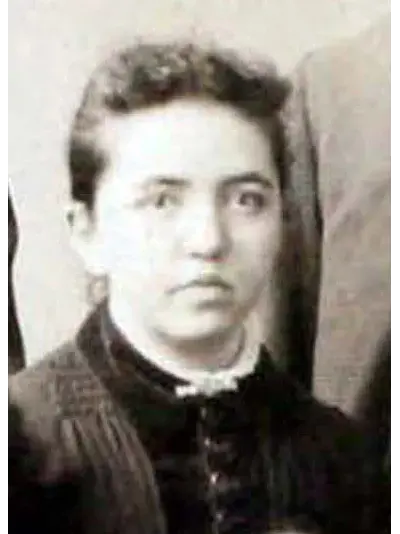
- Born: November 21, 1870
- Died: March 14, 1953
- Nationality:
- Profession: Christian Missionary
Grace H. Knapp was an American Christian missionary and teacher who served in the Ottoman Empire. During her time as a missionary, Knapp was a witness to the Armenian Genocide. During the Armenian Genocide, Knapp was stationed in Van and eventually described the events in the region in two published books describing her experiences. The first book, The Mission at Van in Turkey in War Time, describes in detail the massacres of Armenians by Turkish soldiers during the Van Resistance. Her second book, The Tragedy of Bitlis, relates the narratives of two nurses who witnessed massacres of Armenians in Bitlis. Her recounts of Bitlis are one of the few written accounts of massacres in that area.
