William J. Brennan Jr. Quotes
The modern public school derived from a philosophy of freedom reflected in the First Amendment ... The non-sectarian or secular public school was the means of reconciling freedom in general with religious freedom.
Brennan, William J. Concurring Opinion. School Dist. of Abington Twp. v. Schempp. 374 U.S. 203. Supreme Court of the United States. 17 June 1963.


This book is endorsed by major religious organizations of all faiths as well as National School Boards Association, National Education Association, National PTA, National Association of Secondary School Principals, National Association of Elementary School Principals, American Association of School Administrators and others. It is used as a guideline by most schools systems in the United States.


The Soviet state had varied views regarding religion in different times. In the early days of the Russian Revolution, the Russian Orthodox Church was a major supporter of the Csar and serfdom. That caused a certain hostility to the Russian Church. That Church meanwhile had previously been extremely hostile to Jews and Roman Catholics and never recognized Protestant Churches. So Russians as a group were already discriminating against all religion except the Russian Orthodox Church before the Communist Revolution took place. When the Russian Communists were well entrenched in power, they saw the Russian Church as an obstacle to modernization and were hostile to any group that had a loyalty to any force or deity that was not the Soviet State.
Liberia had been founded by American Free Negroes. American religious missionary organizations were very helpful in building the new nation, but they also created their own parochial, religious day schools. And behind the scenes they blocked efforts to establish a public school system. Walker, in America, was trying to get public support for allowing there to be public schools in Liberia.


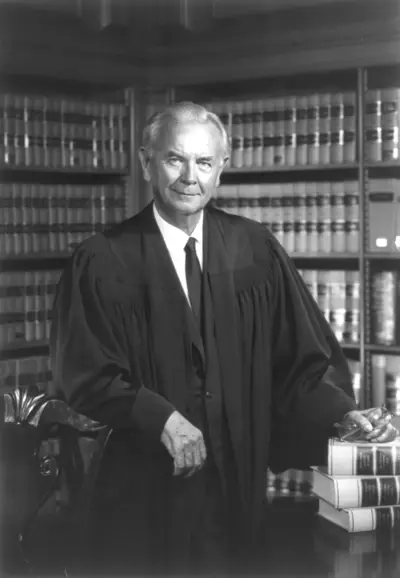
William Joseph Brennan Jr. was an American lawyer and jurist who served as an Associate Justice of the United States Supreme Court from 1956 to 1990. He was the seventh-longest-serving justice in Supreme Court history, and known for being a leader of the Court's liberal wing.
