Andrew Jackson Quotes
The mischief springs from the power which the monied interest derives from a paper currency, which they are able to control, from the multitude of corporations with exclusive privileges which they have succeeded in obtaining in the different states.
Andrew Jackson, 1767-1845, 7th President of the United States (Democrat, TN), Presidential Message, 1829
Sourced by: Eigen's Political and Historical Quotations


The National City Company was formed expressly as an attempt to dominate and monopolize the United States economy. It was a holding company that included Standard Oil, National City Bank, 16 other banks, and the Union Pacific and Southern Pacific railroads among others, all controlled by the same 3 men--William Rockefeller, .James Stillman, and Frank Vanderlip.


This statement during the First World War so frightened the Woodrow Wilson administration that they jailed Debs for saying it and other similar statements like {640244}. The statement was generally suppressed with few newspapers carrying it. The problem for the administration was that enlistments might decrease and force them to draft the wealthy and their sons which was, with very few exceptions, not acceptable to the “upper classes”.


McFadden and a few others were haters of private bankers in general and to them foreign bankers were the worst of all.


Running against FDR for the 1932 Democratic presidential nomination:

If there would be free competition in banking as opposed to monopolies in each area, This is the first major history of banks written in the United States. At the time, there was hardly any competition amongst banks. Each bank had a do facto or official monopoly in its area. In many communities of America, this is still true, but competition in banking has reached almost all high density areas of the country.
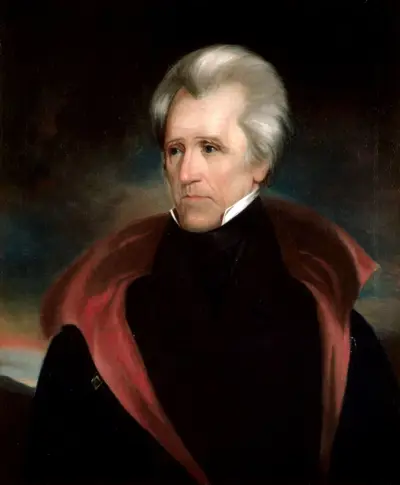
Andrew Jackson was an American lawyer, soldier, and statesman who served as the seventh president of the United States from 1829 to 1837. Before being elected to the presidency, Jackson gained fame as a general in the United States Army and served in both houses of the U.S. Congress. An expansionist president, Jackson sought to advance the rights of the "common man" against a "corrupt aristocracy" and to preserve the Union.
