Albert J. Nock Quotes
The mentality of an army on the march is merely so much delayed adolescence; it remains persistently, incorrigibly and notoriously infantile.
Albert J. Nock, 1873–1945, Philosopher, educational theorist, social critic, Philosophical founder of the modern, Extreme Libertarian Conservative movement, Our Enemy, the State, 1935
Sourced by: Eigen's Political and Historical Quotations


Drumbo was morally opposed to war. He also refused to name Hollywood communists to Congressional Committees during the Red Scare. He was then blacklisted from his occupation, screen writing.


He lost the vote on this issue, and the Congress created the first committee to investigate and oversee military affairs.

Honore Gabriel Victor Requiti


An example of this was the landing in the beaches of Normandy in WWII. Once on the beaches the allied troops had to win or die. Some of the most heroic fighting in American and English military history occurred on those beaches. Another was the Spanish Explorer Hernando Cortez who after landing in the New World, had his ships burned so that he and his soldiers had to conquer or they would die.


Root was serving as Secretary of War at the time. The army of the United States was in sad shape. Congress did not want to appropriate much money for the military as there was no one to fight any longer. Indians had been subdued, relations with Canada were excellent. Mexico was too weak to be a threat, and the Pacific and Atlantic Oceans protected against invasion by large forces. The navy was in much better shape and could protect against invasion from abroad anyway. The Republicans then were in control of government and were generally very isolationist. And there was the traditional American animus to a standing Army. See {601390} and {592824} for examples of that attitude. The army itself was a set of individual fiefdoms with nepotism and cronyism rampant with no general staff to have the big picture. Theodore Roosevelt and Root, unlike most other Republicans, wanted to reform and build up the army as well as strengthen the navy,
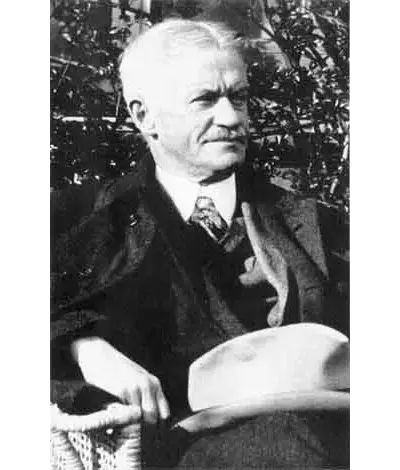
Albert Jay Nock was an American libertarian author, editor first of The Freeman and then The Nation, educational theorist, Georgist, and social critic of the early and middle 20th century. He was an outspoken opponent of the New Deal, and served as a fundamental inspiration for the modern libertarian and conservative movements, cited as an influence by William F. Buckley Jr. He was one of the first Americans to self-identify as "libertarian". His best-known books are Memoirs of a Superfluous Man and Our Enemy, the State.
