Emma Goldman Quotes
When the child has reached manhood he is thoroughly saturated with the belief that he is chosen by the Lord himself to defend his country against the attack or invasion of any foreigner. It is for that purpose that we are clamoring for a greater army and navy, more battleships and ammunition.
Goldman, Emma. Anarchism and Other Essays. Mother Earth Publishing Association, 1910, p. 131.

Greek invaders were marching on Istanbul


He was a brutal, sadistic war criminal who was assassinated by one of his many enemies in 2000 before he could be brought to trial.

Karsh was arguing that Arab citizens of Israel should be required to serve in the Israeli army and fight against other Arabs who have repeatedly attacked Israel. The Israeli tradition has been not to require Arab citizens to fight against what might be their own relatives. Karsh and others argue that Italian-Americans fought against other Italians in WWII, German-Americans fought against Germans.

In 1878 there was tension between England and Russia. Some in England were militant advocates of war. This song was extremely popular among them. As a result, they became known as Jingoes or Jingoists. The song became popular in America at the approach of the Spanish-American War and jingoism became part of the American political vocabulary.

At that time there were extensive meetings and discussions for the creation of what was to be the United Nations. The negative view of the United Nations or other international security organization is now and always has been held by a vocal minority in the United States.


The Turks held and then counterattacked defeating the Greek invaders soundly. The Greeks then retreated and evacuated Anatolia but in vengeance for their defeat, followed a scorched earth policy and committed many atrocities on the Turkish villages they passed through.


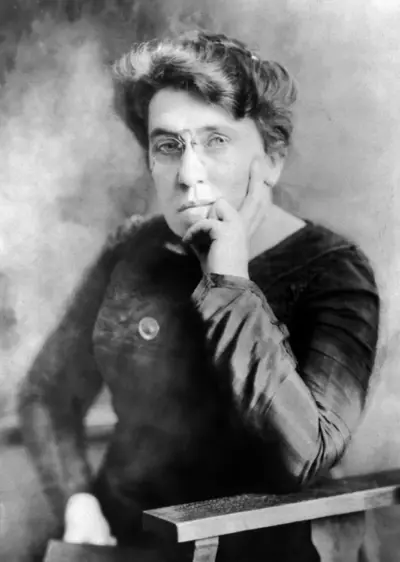
Emma Goldman was an anarchist known for her political activism, writing, and speeches. She played a pivotal role in the development of anarchist political philosophy in North America and Europe in the first half of the 20th century.
