John Bates Clark Quotes
The market tends to pay as a wage what an individual laborer is worth. But the case last studied suggests the question how accurately the law operates in practice. May it not be an honest law, but be so vitiated in its working as to give a dishonest result?
Clark, John Bates. The Distribution of Wealth: A Theory of Wages, Interest and Profits. The Macmillan Company, 1899.

This is not a common quotation from Thoreau. The great man for whom the establishment had so much respect had a very anti-capitalist streak. His view is that the employer will generally never pay his laborers a fair wage. Instead he will pay the laborer the lowest rate for which he can obtain the laborers services. If the laborer generates added value for his wage, the employer is in a zero sum game with the laborer. If part of the added value—the profit is paid to the laborer, the employer does not have it for himself (or his stockholders). In most cases, the laborer is forced to work for his and his family’s subsistence. This theory argues that they only way the laborer will get a fair wage is if there is a labor shortage (assuming no government laws or union pressure is in the picture. Many capitalists argue that a “fair” wage is what a free man is willing to work for and a free employer is willing to pay. So economics is like politics in general with respect to fairness—there is no universally accepted definition of what is fair.


This quotation is noteworthy because it documents the mental breakdown that the great labor leader went through in his later years. He loved the workers and they loved hum. However, as he got older, he was more isolated with his personal staff and became paranoid—a problem that many highly charismatic leaders had towards the end of their careers.

Bourne was an expert in the history of the the New World


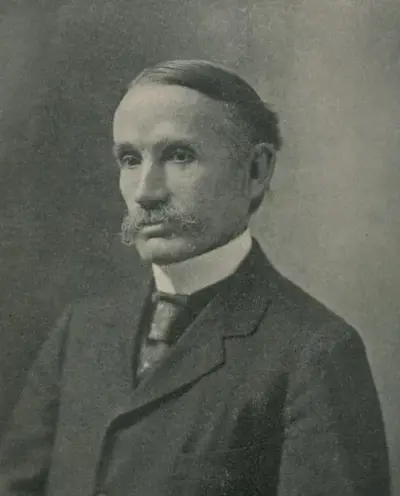
John Bates Clark was an American neoclassical economist. He was one of the pioneers of the marginalist revolution and opponent to the Institutionalist school of economics, and spent most of his career as professor at Columbia University.
