Rose Schneiderman Quotes
The life of men and women is so cheap and property is so sacred. There are so many of us for one job it matters little if 146 of us are burned to death.
Schneiderman, Rose. Speech at the Metropolitan Opera House, 2 Apr. 1911, New York. Quoted in "The Triangle Fire Memorial Meeting." The Survey, vol. 26, 8 Apr. 1911, p. 84.


One of the contradictions of capitalism is that at many points in history capitalism has caused and/or contributed to great death and suffering. However, that same capitalism has led to the development of science, technology, agronomy, medicine and education which has saved and preserved millions of lives and raised the standard of living more than anything else.


“Dear” was an adjective that was used (and still is) in England. It means “expensive”. Like so many activities today, this has existed throughout time. Here, in many of the very early American Colonies (in this case, Virginia), where a few ended up with most of the land while many who fought and bled for it did not.

In 1877 Wasburn was dropped from the List of Ministers by the Unitarian Church. He had become quite atheistic.


At the time, it did seem impossible that labor and capital would ever have harmonious relations. But the notion that slavery would solve the problem is as preposterous as anything ever entered into the American political dialogue. But there were many in the South, and some in the North, who actually believed it. Even 150 years later, while labor and capital relations were much better than pre Civil War, they still could not be described as “harmonious” or “friendly”.

This quotation is interesting for two reasons. First it is a good example of the twisted logic of some of the Slavery apologists who claimed that the Negro slave was better off than the free wage earner. The second reason is that it illustrates the norms of the treatment of the working man before the Civil War. The union movement would change the situation for the free laborer over the next century and then holidays and worker rights became normalized in American society. See {641290} for another of his absurd arguments.


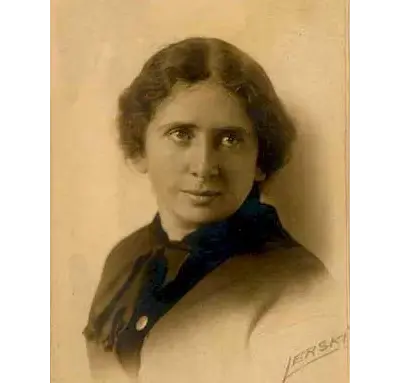
Rose Schneiderman was a Polish-born American socialist and feminist, and one of the most prominent female labor union leaders. As a member of the New York Women's Trade Union League, she drew attention to unsafe workplace conditions, following the Triangle Shirtwaist Factory fire of 1911, and as a suffragist she helped to pass the New York state referendum of 1917 that gave women the right to vote. Schneiderman was also a founding member of the American Civil Liberties Union and served on the National Recovery Administration's Labor Advisory Board under President Franklin D. Roosevelt. She is credited with coining the phrase "Bread and Roses," to indicate a worker's right to something higher than subsistence living.
