Henry A. Kissinger Quotes
The key decision for a statesman is whether to commit his nation or not. There is no middle course. Once a great nation commits itself, it must prevail. It will acquire no kudos for translating its inner doubts into hesitation.
Kissinger, Henry. White House Years. Little, Brown and Company, 1979, p. 256.


Zacharia read the quotation which the audience was sure was another of the many Republican attacks on Barack Obama’s foreign policy and his decision making. The Republicans came up with the same type rhetoric that they did in earlier years with Democratic Presidents starting with Harry Truman. There have always been some politicians and pundits who regard any President (or other leader) who takes time to gather facts, hear alternative views, consider and reflect upon them, and then reach a decision as week and indecisive—an intellectual. To them, a real man—a real leader—listens looks at an issue before him and shows decisiveness by not vacillating and making his decision relatively quickly. To them if it took that much time and thought to reach a decision the President is not confident that his is the right decision and that shows weakness. Of course, every senior leader knows that if the decision reaches him, there is no clear good solution. If there were, it would have been decided at a lower level. Ideologues however don’t like to acknowledge complexity.


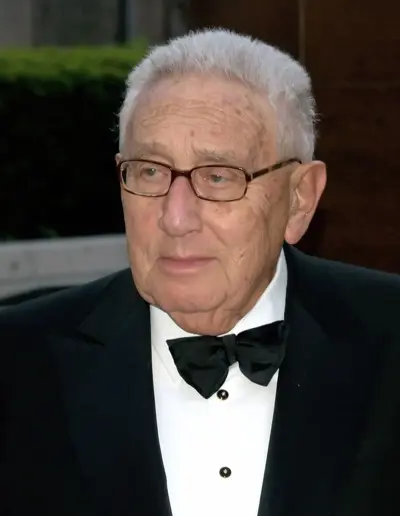
Henry Alfred Kissinger KCMG is an American politician, diplomat, and geopolitical consultant who served as United States Secretary of State and National Security Advisor under the presidential administrations of Richard Nixon and Gerald Ford. A Jewish refugee who fled Nazi Germany with his family in 1938, he became National Security Advisor in 1969 and U.S. Secretary of State in 1973. For his actions negotiating a ceasefire in Vietnam, Kissinger received the 1973 Nobel Peace Prize under controversial circumstances, with two members of the committee resigning in protest.
