Thomas Paine Quotes
The instant formal government is abolished, society begins to act. A general association takes place, and common interest produces common security.
Paine, Thomas. Rights of Man, Part II. J.S. Jordan, 1792, p. 8.


Even in democracies, governments sometimes adopt programs or policies which are not those preferred by a majority of the people. Frequently, a program which has initial public support losses that support yet the government “stays the course”. Legislative and Constitutional complexities sometimes will allow minorities to dictate practices and policies that do not have majority support. In pseudo-democracies and authoritarian regimes the people have little to say in government activities. The result is that there is often a distinction between a society and its government. In many cases foreign opinion of a government and its people are different. America is the classic example, where Americans and American society is much more popular in many nations than is the United States government.


Spinoza was one of the most feared intellectuals in human history—feared, that is, by the established power structures. Spinoza’s ideas were considered so radical and dangerous that he was the only man in history who was excommunicated by the Catholics, the Jews and the Muslims.

Trashing government’s ability to do things was not new to the Ronald Reagan era and after. It had a long history.


Dictators like Bashir view protests and demonstrations as threats to stability of the nation. The statement is code for “Stop the demonstrations, because stability is more important than reform.


Commencement Address, Harvard University, June 8, 1978

1st Viscount Snowden. This quotation is particularly interesting in that we have an early 20th century socialist acknowledging that one of the objectives of Socialism is to increase the individual’s dependency on the state. By the late 19th century, few socialists if any saw this as an objective of socialism. However, this dependency objective is one of the attack points of conservatives who assume that this is a result of socialism whether or not it was intended.


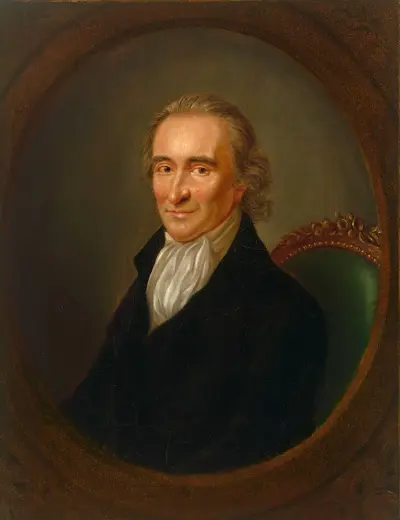
Thomas Paine was an English-born American political activist, philosopher, political theorist, and revolutionary. He authored Common Sense (1776) and The American Crisis (1776–1783), the two most influential pamphlets at the start of the American Revolution, and helped inspire the patriots in 1776 to declare independence from Great Britain. His ideas reflected Enlightenment-era ideals of transnational human rights. Historian Saul K. Padover described him as "a corsetmaker by trade, a journalist by profession, and a propagandist by inclination".
