Yukio Mishima Quotes
The images which the [press] photographer has filtered from reality, whether particular events or the anguish of human reactions to them, already bear a stamp of authenticity which the photographer is powerless to alter by one jot or tittle; the meaning of the objects, by a process of purification, itself becomes the theme of the work.
Mishima, Yukio. Preface. Ordeal by Roses, by Eikoh Hosoe, Aperture, 1985, p. 5.


Abe Rosenthal, statement to a reporter who he fired for having an affair with a politician, and continuing to cover his politics. There are multiple variations of this quote in circulation – this seems to be the most accurate.


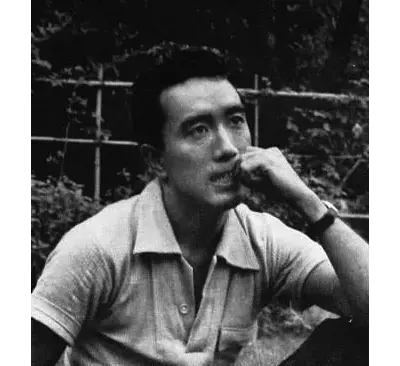
Yukio Mishima, born Kimitake Hiraoka (平岡 公威, Hiraoka Kimitake) was a Japanese author, poet, playwright, actor, model, Shintoist, nationalist, and founder of the Tatenokai (楯の会, "Shield Society"), an unarmed civilian militia. Mishima is considered one of the most important Japanese authors of the 20th century. He was considered for the Nobel Prize in Literature in 1968, but the award went to his countryman and benefactor Yasunari Kawabata. His works include the novels Confessions of a Mask (仮面の告白, Kamen no kokuhaku) and The Temple of the Golden Pavilion (金閣寺, Kinkaku-ji), and the autobiographical essay "Sun and Steel" (太陽と鉄, Taiyō to tetsu). Mishima's work is characterized by "its luxurious vocabulary and decadent metaphors, its fusion of traditional Japanese and modern Western literary styles, and its obsessive assertions of the unity of beauty, eroticism and death".
